|

Pre-release
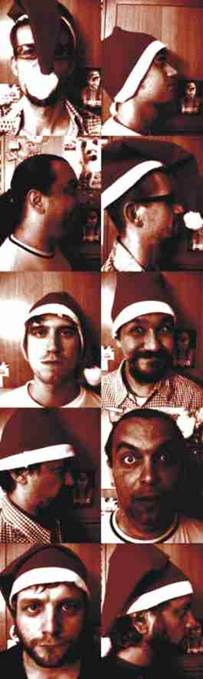
I Brother K sono: Alessandro Ducoli
(voce in maladea, reading in sotterranea II e punto di luce), Andrea
Bellicini (voce in maladea, chitarre noise in sotterranea II, disarmonia,
maladea e brain strike), Andrei Kutov (pianoforte, synth, programmazioni e
arrangiamenti), Federico Troncatti (compositore sperimentale), Boris
Savoldelli (voci ed effetti vocali).
Scritto, arrangiato e prodotto dai
Brother K (tutti i testi sono di Alessandro Ducoli).
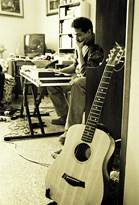
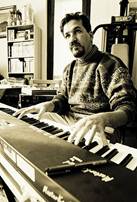
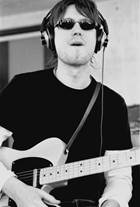
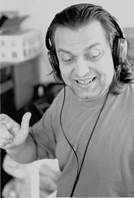
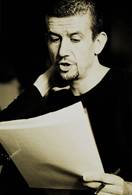
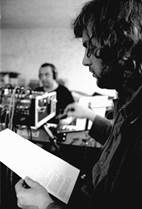
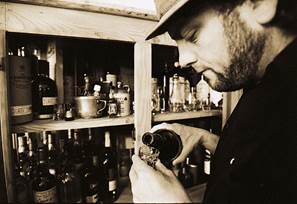
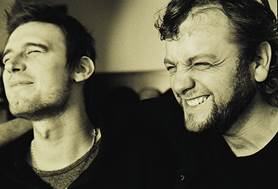
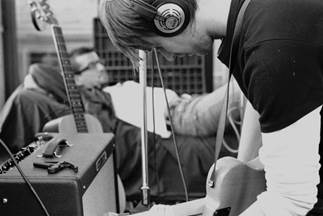
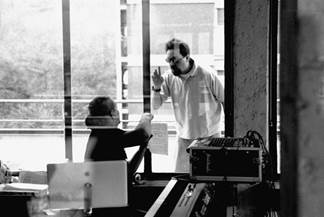
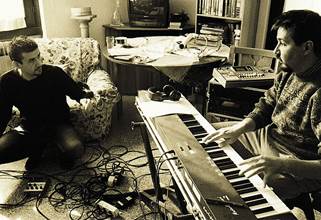
Fotografie nel booklet packaging di
Fabio “Mr. Slade” Gamba. Un grazie
particolare a: Teo Marchese (batteria), Morris Peretti (chitarre), Mario
Stivala (chitarra in Gennaio 1971),
Giuliano Muratori (tromba in Disarmonia, Il mio cane non si muove
quando prego e Punto di Luce), Paolo Filippi e il Cavo’ Studio per la registrazione
di Subterraneans, Gabriele Rondini e Paolo Panteghini per le chitarre e gli
amplificatori, Furio Sollazzi per aver suggerito la realizzazione di Io?. Un
grazie molto particolare a Mark Murphy per averci regalato il reading di
Subterraneans.

release
THE BROTHER K .. Federico Troncatti
.. Boris Savoldelli .. Andrea Bellicini ..
Alessandro Ducoli .. Andrej Cutov
THE GUEST .. Mark Murphy ..
Ellade Bandini .. Ares Tavolazzi .. Fabrizio Bosso and High Five .. Teo Marchese .. Paolo Filippi .. Gianluca Petrella .. Max Gabanizza ..
Gendrixson Mena .. Morris Peretti .. Alessandro Galati .. Giuliano Muratori
.. Mario Stivala .. Tino Tracanna .. Sandro Gibellini .. Max Furian Band ..
Available
On the Web
(site)
On the Web
(My Space)
An Italian
Kerouac tribute!!?? Who would have believed...Boris Savoldelli’s voice sounds
so very much of a part of this....for one reason, he was the originator of
this idea to give Kerouac to the Italian readers and fans...his voice has
such a sympatico feeling coming out of the music and writings they all did to
further this dynamic project along .
Fernanda Pivano, that lovely lady from so many eras of ideas and love
and writers and writings from the heart of Jack Kerouac and other writers he
inspired, had made Boris sing mellow
and soulful renditions that even he didnt't know he had these in him!!!!!!! Mark
Murphy (26 nov. 2004)
Federico Troncatti
(classe 65, compositore di musica sperimentale contemporanea, diplomato al
Conservatorio di Brescia in composizione e armonia), Boris
Savoldelli (classe 70, vocalist che proviene dalla scuola
di Mark Murphy con cui studia e collabora attivamente in Italia e negli Stati
Uniti), Andrea
Bellicini (classe 74, bassista e autore attivo nell'underground
italiano), Alessandro Ducoli
(classe 71, cantautore), Andrei Kutov
(classe 66, pianista e arrangiatore, laureato al conservatorio di
Rostov-sul-Don, Russia).
Non si tratta di una vera e propria band ma di un gruppo di autori accomunati
dalla passione per l'opera letteraria di Kerouac e per il suo stretto legame
con la musica.
Attualmente i Brother K hanno completato la realizzane del loro primo
progetto, intitolato "Degeneration Beat", un tentativo volutamente
“non filologicamente corretto” di trasportare il “mood” della “scrittura
jazz” della Beat generation, così fortemente vivo e così “esclusivamente”
americano, nella realtà contemporanea della provincia dell'Italia del Nord.
Oggi in collaborazione
con Paolo Filippi e Teo Marchese del Cavò Studio di Bergamo
sta per uscire un'altra versione di "Degeneration Beat". Nel lavoro
compaiono diversi musicisti che hanno contribuito a riconoscerne la “positiva
follia”. Tra questi figurano Mark Murphy, Ellade Bandini, Ares Tavolazzi,
Fabrizio Bosso and High Five, Max Furian and band, Tino Tracanna, Gianluca
Petrella, Max Gabanizza, Sandro Gibellini, Gendrixson Mena.

|
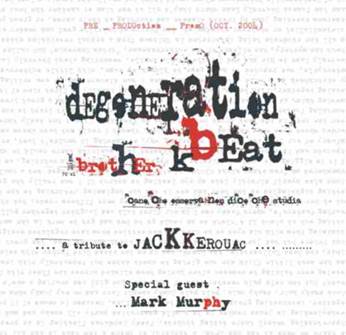
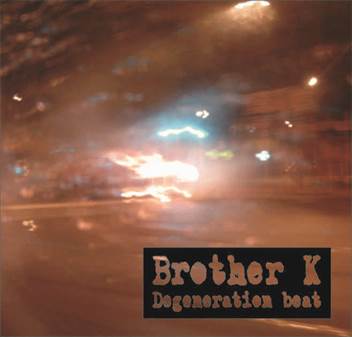
Brother K, Degeneration Beat
(2004, pre-release; 2006 release; UNPUBLISHED)
Liriche
Conosci Kerouac?
Puoi pensare di
trovare il Beat in Italia? Pensi che esista qualcosa che si possa anche solo
avvicinare ad un'ipotetica definizione di Beat? Io non credo. Non vedo grandi
forme di Beat nell'Italia di oggi. Tanto meno al nord. Sono presuntuoso?
Pazienza. Forse non ho capito niente né di Beat né e di Italia. Voi?
Partiamo comunque dal fatto che non conosco Jack Kerouac e nessuno degli
autori che appartengono alla corrente letteraria della Beat generation (alla
fine di questo "viaggio" mi documenterò). I miei compari mi hanno
coinvolto in questo lavoro proprio perché non conosco Jack Kerouac. Proprio
perché potessi inventarmi un mio personale concetto di Beat. Un esperimento.
Loro si sono limitati a darmi qualche informazione sullo stile e filosofia di
vita di Jack Kerouac e sulla musica che occorreva ascoltare per provare a
capirlo. Il resto è solo un esperimento.
Può sembrare strano ma è davvero andata così. Credo che la mia estraneità a
Jack Kerouac sia stata reputata una condizione necessaria per conservare
quella naturalezza che mi è stato spiegato essere propria della Beat
generation. Scrivere Beat sapendo cos'è il Beat non è Beat. Forse. Non lo so.
Non so neanche questo. Non importa.
Ho iniziato prendendo appunti e scrivendo pensieri e concetti vari. Scrivere
"a getto continuo" (questo era uno dei punti fermi spiegatomi
riguardo a Kerouac), senza una metrica particolare e senza associare il
flusso di voce a particolari suoni, armonizzazioni e melodie. Solo scansioni
ritmiche. Utilizzate semplicemente per "fermare" alcune cose che mi
premeva fossero ben chiare nel mio personale concetto di Beat (tralascerò momenti,
stati d'animo, luoghi e condizioni fisiche reali e "create"). In
questo modo ho individuato "la storia". Un ibrido di storia. La
prima bozza di questo lavoro era pronta già prima dell'estate: A Kerouac
italian experience.
Scrivere Beat (stati d'animo, musica e lettere)
Cosa sono le parole Beat? Credo siano quelle che puoi cantare ascoltando
Charlie Parker o Lester Young. Credo qualcosa di simile. Il Bop anni '50 è
una componente fondamentale della "generazione Beat"? Diciamo che
non ha importanza saperlo se diamo per scontato che è davvero così. Velocità,
ritmo, armonia e melodia. Scomposizione delle regole per attribuire alle
parole un significato Bop. Distruzione della punteggiatura. Tutto a servizio
di Parker. Tutto a servizio della musica, delle terzine, delle sestine,
ottavi, sedicesimi, trentaduesimi, settime, none, tredicesime. Ovunque siano
ascoltabili da Parker in poi. Se lo si considera un suggerimento credo sia
già un buon punto di partenza.
Si dice che l'infinità di monosillabi e soprattutto di assonanze, tipiche
della lingua americana, ne rendano più facile la "scrittura veloce"
(forse è meglio parlare di "lettura veloce" ma credo sia quasi la
stessa cosa). La nostra lingua non è Beat? Forse arriva da altre forme di
espressione. Non so nemmeno questo. Bella consolazione. Non credo sia
importante. Occorre vincolare la necessità di esprimere concetti e parole ad
un lessico che consenta di parlare su tempi e scansioni ritmiche ben
definite. Quindi niente di particolarmente difficile. Si potrebbe anche
pensare alla possibilità di utilizzare i dialetti. Possiedono più monosillabi
e assonanze. Non è questo il fine. Occorrono scomposizioni ulteriori. Bisogna
compiere un vero e proprio massacro grammaticale. Scrivere semplicemente
ascoltando musica. Come Jack Kerouac. Niente di nuovo.
Ascoltare musica è molto facile. Capirla un po' meno. Occorre certo partire
dal Bop ma bisogna anche "aggiornare" i suoni. È importante. Più
credibile. Del resto credo che essere Beat non significhi non essere aggiornati.
Tonnellate di musiche e ritmi ascoltate anche per intere notti (di notte non
ti disturba nessuno e di giorno solitamente si fanno altre cose). Gli appunti
di A Kerouac italian experience sono stati ripresi per essere scritti sulle
scansioni ritmiche delle musiche ascoltate. Alcune veloci, altre di meno,
altre non mi ricordo. Scrivere in continuazione. Ogni cosa che viene fuori
dalla testa va appoggiata su una scansione ritmica. Un flusso di voce
ritmico.
Un aspetto mai sottovalutato è l'argomento. Cosa scrive uno che si immagina
di dover scrivere Beat? Puttane, birra, droga, polizia, vomito, merda,
sigarette, macchine, fari, gasolina, fango, polvere, eccetera? Un bel
problema. Mi sembra peraltro di aver capito che per essere Beat bisogna
vivere Beat. Quello che scrivi è quello che vivi, altrimenti non è Beat.
Alcuni argomenti citati sono da escludere. Altri però funzionano. Da quelli
bisogna cominciare. Un inizio è già qualcosa.
La mia maggiore preoccupazione era quella di scrivere cose attribuibili al
Beat ma non del tutto vissute. Uno scimmione, un fumetto, una caricatura, un
coglione insomma. Non mi accontento di ipocritare le lettere di qualcun
altro, vorrei di più. Ma il concetto di Beat ascoltando Parker, ad esempio,
diventa un incubo. Cosa scrivi? Cosa ti inventi se vivi in mondo come la
provincia di Brescia del 2003. Come la Camunia del 2003. L'unica cosa Beat
che mi viene in mente non è certo il cavalcavia della "Superstrada"
n. 42 che mi passa sopra il tetto. Non è nemmeno la domenica al centro
commerciale a mangiare il gelato. Un'ossessiva ricerca di Beat però, già di
per sé, può essere un atteggiamento Beat. Poco illuminante ma pur sempre un
inizio e abbiamo già detto che per ora ci basta questo.
Cercare il Beat
Il problema è stato evidenziato. La soluzione è a portata di mano. Avendo
saputo dai compari che una volta (forse l'unica) del Kerouac in Italia non è
stata proprio ciò che si possa definire un "trionfo" (si è
addormentato durante l'intervista, era pieno di whisky; un giusto atteggiamento
per "svegliare" l'interlocutore italiano), ho pensato di dargli
un'altra "possibilità". Jack Kerouac vive in Italia. In provincia
di Brescia. In Camunia. Breno. Gera Balote, n. 6. Non penso certo di essere
io, cosa pensavate?
Il racconto dovrà essere il tentativo di ricerca del Beat nei ritmi e negli
stili di vita di una provincia italiana come quella in cui vivo.
E la musica? Diventa un po' difficile pensare di utilizzare il Jazz come
"colonna sonora" di questa storia. Il Jazz non arriva mica dalle
Alpi. Però Parker non era nemmeno del paese di Kerouac. Lo stesso problema
forse è capitato anche a lui. Non ci credo ma non importa. Un tentativo già
morto in partenza? L'abbiamo dato per assunto all'inizio per cui nessun
problema. Possiamo identificare il tutto anche in un tentativo di
"rifiuto della logicità" che (almeno credo) costituisce un
atteggiamento tipico del Beat. Forse ci siamo. Abbiamo individuato il
"dove", il quando è "oggi", e ora sappiamo anche il
"perché". Charlie Parker.
Vi confesso che terminata la prima bozza dei testi ho perso le coordinate di
tutta la faccenda. Forse il primo vero segnale Beat. Per proseguire non
bastavano più le parole. Occorreva la musica. Il ritmo. Ho scritto dei
commenti alle bozze per far capire ai compari l'idea che avevo in testa e
soprattutto per verificare se ero vicino a quello che si immaginavano. Mi
serviva verificare le loro impressioni. Occorreva capire se eravamo sulla
buona strada oppure se si trattava di semplice cazzeggio andato male. Si
poteva partire.
Degeneration Beat
Giovedì 28 settembre ore 18.00 - Domenica 1 ottobre ore 21.00. Questo è stato
il "primo turno" della banda del Beat. Abbiamo iniziato a
sviluppare concetti e opinioni preparati in estate per confrontare le nostre
idee. Il risultato di questi giorni di lavoro è spiegato meglio nelle righe
successive. Per ora occorre raccontarvi quanto segue.
Ho iniziato a verificare l'adattabilità delle parole e dei testi che avevo
scritto alle musiche che avevano suscitato nei miei compari. Già con la prima
canzone scelta, Il mio cane non si muove quando prego, mi sono accorto della
difficoltà di legare il flusso di testo a quello dello note. La descrizione
dei luoghi e degli stati d'animo inseriti nella bozza si dilungava in maniera
eccessiva. La necessità di poter parlare di questo o quel dettaglio
appesantiva il Beat della canzone. Il problema è che alcune situazioni per
essere descritte hanno bisogno comunque di parole adeguate e per fare questo
bisogna rispettare almeno alcune delle tradizionali regole di scrittura. La
grammatica aiuta ma non basta. Tuttavia si trattava di
"sacrificare" il parlato per aggiungere ritmo. Abbastanza chiaro.
L'obiettivo è assolutamente questo. Più importante che far capire i dettagli
di una determinata situazione. Occorreva quindi un'ulteriore scomposizione di
alcune regole di scrittura. Parlare di una situazione, utilizzando solo
alcune figurazioni descrittive. Lasciare che il resto del contesto sia
sottinteso. Immaginabile. Questo può essere un atteggiamento Beat. Il primo
lavoro di distruzione delle regole di scrittura della lingua italiana già
attuato nella bozza era già ampiamente assodato. Ora ne occorreva un secondo,
più sottile. Non più soltanto ritmico.
Un altro problema che ho dovuto affrontare è stata la necessità di
distruzione del preconcetto Beat che latitava nei miei testi. Il mito stava
contaminando la naturalità delle parole e questo non è Beat (la mia
estraneità alla Beat generation non mi ha certo risparmiato il suo mito).
Distruggere il mio Beat. Degenerare il Beat. Degeneration Beat.
Eccovi un esempio di quello che erano i testi nella bozza preparata e di
quello che poi sono diventati per "servire" la musica (ci sono
state anche situazioni in cui è stato il contrario ma le vediamo dopo):
Siamo uguali a queste mosche,
Con la pancia mezza piena di liquore
Mezza vuota di sapore, tocca il fiume e poi ci cade,
Non ci crede ma finisce
Dentro il fiume, la sua corsa dentro il fiume.
Io, non credo, non vedo quasi più
Si avvicinano le mura di sinistra,
Mi avvicino sulle mura messe a destra
Mi avvicino alla muraglia verso l'acqua
Verso l'acqua e chiedo scusa.
Il cane non si muove, non si muove quando prego
Fa una piega verso destra quando piscia
Uguali alle mosche, la pancia si spacca
Riempita di mezzo liquore mi osserva
Si appoggia nel fiume, ricade, finisce
Si prende le cose per quello che sono.
Il muro di destra vicino si sposta
Sinistra la curva si muove da sola
Nel fiume finisce soltanto la merda
Il cane mi guarda, non muove una piega
Non so se tutto questo lavoro di adattamento delle parole rientra nella
filosofia Beat. Ho sempre avuto paura di togliere quella naturalezza che
credo sia tipica dello scrivere Beat. Rimane comunque il fatto che le canzoni
erano state pensate ascoltando la musica dei dischi Jazz che ho in casa.
Quindi un lavoro di adattamento del testo era comunque necessario. Vi
assicuro che il flusso di parole adattato alle musiche poi costruite in quei
giorni è stato assolutamente naturale. Immediato. Alle bozze di A Kerouac
italian experience ho rubato solo l'idea della situazione che descrivevano.
Per la cronaca. I testi delle 13 canzoni scelte per questo lavoro sono stati
completati allo stesso modo. Ovviamente è stato necessario un "secondo
turno" (Venerdì 17 ottobre ore 20.00 - Domenica 19 ottobre ore 22.00).
Book maker's story
Occorre iniziare il lavoro con atmosfere Bop. Siamo un po' in ritardo ma non
importa. Abbiamo bisogno di far capire il "perché". Dopo diverse
difficoltà di carattere metrico abbiamo iniziato ad abbozzare la canzone che
avrebbe dovuto introdurre alla Degeneration Beat. Book maker's story. Ecco
cosa è successo.
Impietosamente, la notte
Rivela cose così
Si mostrano più chiare, io le vedo da qui
Sono appoggiato da meno di un'ora
Improvvisamente, la notte
Scommette quello che sei
Pagati sotto zero, ci si muove così
Sono arrivato dal mio quarto d'ora
Scommesse, scommettitori e allibratori. Il luogo e il personaggio. Un uomo
normale, né onesto né disonesto. Musica. Un locale normale, mediamente
frequentato. L'attesa in un Pork pie hat bar. Cinematografico se volete ma
creato per l'esigenza di Bop. Inesorabile destino Bop.
Io ti osservo, come vuoi
Io ti cerco per quello che sei
La consapevolezza. Elemento determinante per far capire che la situazione non
lascia molto spazio ad ulteriori fantasie. Consapevolezza di essere pagati al
di sotto di zero. Si scommette solo sé coglioni, pazzi, oppure per sognare.
Non importa. È importante che l'allibratore sappia che noi giocatori sappiamo
anche questo. Forse si tratta di una sorta di pegno da pagare per essere
parte del gioco. Una tassa se volete. Una tassa Bop.
Osservare. Osservare è una delle cose migliori della vita. Osservare per
provare a capire. Ovviamente.
Impietosamente, la notte
Diventa parte di lei
Qui dentro nessun dio riesce a dire di no
Nessun divieto per chi deve sognare.
Improvvisamente, la notte
Ragiona solo per lei
Che muove le sue cose per parlare con noi
Nessun divieto per chi deve pagare.
L'analisi della situazione dura quello che serve. Niente di più. In
Degeration Beat le "analisi" sono diverse. Niente di maniacale.
Soltanto l'assunto che ogni situazione ha bisogno dei suoi tempi di studio.
Anche se non sempre è determinante capirci qualcosa. Siamo quindi pronti a
pagare la nostra piccola tassa. Bisogna essere parte di quello che succede.
Solo in questo modo la notte chiarisce meglio il contesto. Siamo parte di
lei.
Quello che importa sottolineare nelle frasi raccontate è comunque l'assenza
di divieti per chi vuole davvero sognare. In un certo senso mi sembra di
vederlo come un atto d'amore verso la semplicità. Forse si tratta del metodo
più facile per trovare armonia in quello che ci circonda. Sognare. Abbiamo
trovato parole e armonia. Un po' di ritmo e di melodia. C'è tutto. Book
maker's story.
Sotterranea
Un titolo importante. Soprattutto se ci dev'essere lo "zampino" di
Kerouac. Almeno credo. Il Bar è la nostra seconda casa. Questo è un assunto
Beat che vale in ogni parte del mondo. A Kansas City e in Camunia. Il
concetto fondamentale di questa canzone comunque dev'essere cercato nel
"dislivello" tra la strada e i sotterranei. Il mio concetto di
Sotterranei descrive la capacità di un individuo di riuscire a vivere in due
mondi che lui ritiene completamente diversi (anche se la differenza non è poi
così evidente, solo alcuni scalini di dislivello). La strada, in questo caso,
non ha i connotati Beat più conosciuti. Credo. Forse. La strada qui è il
"mondo normale", quello di tutti i giorni. La sotterranea invece è
"il mondo della notte". Quello che assume i connotati Beat cercati.
Con le sue stelle. Grandi e piccole.
Chi sei tu, muove le cose
Passa musica nel piede
Dal livello superiore della strada
Per raggiungere la stella sotterranea.
Insieme a noi, una scimmia con noi
Muove la sua carcassa, mi produce il nuovo beat.
Il distacco dal livello superiore, per i paranoici come me, lo intendo più
naturale se la colpa di questa cosa è dovuta ad un'altra anima che vive
dentro di noi. Un'anima indipendente, selvatica. L'anima di una scimmia. Una
scimmia rotta, difettosa e malandata. Una scimmia che staccandosi
dall'ordinario produce un senso di Beat. Credo che si tratti della necessità
di rivendicare un latente desiderio di "stato brado" (considerando
lo "Stato" in cui viviamo, mi sembra piuttosto legittimo).
Come un fiore di sambuca
Una mosca mi si affoga così
Quando bevo la fortuna
Brutta luna dentro il fiume che cammina
Non sia mai, il pensiero produce pazzia, per davvero
Una macchia che brucia produce tabacco di fumo da beat.
Il fiore di sambuco. Un po' di rivendicazione alpina ci può stare anche in un
disco "figlio" di San Francisco, Mexico City, Denver, ecc. Il gioco
di parole con la sambuca. Il digestivo. Bevo poca sambuca ma l'accoppiata con
i grani di caffè è grande. Digestivo. Dal locale si vede il fiume e la luna
si riflette dentro l'acqua. Il riflesso è disturbato dalla corrente. Un
pensiero che viene buttato subito via. Un pensiero che comincia a produrre
pazzia. Visioni. La testa della scimmia comincia a prendere il sopravvento.
Beat.
La tua mano non mi basta
Non occorre ripartire
Ripartire per tornare non mi serve
Se mi porta nella stessa condizione.
Proprio qui, la banchina si muove
Il porto si disastra, si perde nei pezzi del mio nuovo beat.
Qualcosa non funziona. Gli elementi tradiscono qualcosa di innaturale. Niente
di particolarmente problematico. Il nostro personaggio quando entra in un
bar, beve come un trattore perché è convinto possa servire a rimettere in
discussione i suoi ragionamenti. Appena trova un po' di Beat lo fà "disastrare".
Una sorta di rimettersi in gioco. Rimane assodato che non serve partire se si
ritorna uguali a prima. Quasi una perdita di tempo inutile. Forse.
Improvvisamente cambia la musica. Visioni di una scimmia. Niente di certo. I
suoni e i pensieri del Monkey Beat. Il suono. Il suono è importante. Abbiamo
deciso di concedere ai suoni "classicamente Beat" solo una canzone
e mezza. La seconda metà di Sotterranea procede quindi in una direzione
diversa. Forse parallela alla direzione della prima metà. Quasi una sorta di
pensiero latente che affianca quello principale.
Osservo la mia tasca,
C'è una macchina che mischia la bevanda e la benzina
Gli da fuoco quando supera la linea.
Ricomincia a stantuffare, lo stantuffo cerebrale.
Una chiave colorata per la porta della porta
La mia chiave difettosa per la porta del cervello
Un biglietto della terra dove cresce granturco,
E un biglietto per il rancio, per sapere dove andare
Per riuscire a ritornare, qui bisogna camminare.
C'è una stoffa ricoperta di schifezza e di penuria
Che si stacca dal mio naso
Che cammina e si dirige verso il centro della sala, senza ruote
Si dirige nel sistema che mi occorre ragionare
Per sapere se si muove la pressione
Se decide della mia colorazione, quando sale, sale male
C'è una piccola manciata di monete, le più basse conosciute
Quelle subito contate e disprezzate dalle masse
C'è una penna per segnare cosa faccio se mi muovo
Le mie mosse controllate i movimenti abituati
Dai vangeli costruiti per tenere più aggiornata la memoria
C'è una piuma per volare, camminare
Con le penne consumate che ho bisogno di asciugare.
Il protagonista assume linguaggio e movenze nuove. Forse c'è una terza anima
dentro di lui. Le due anime che ognuno di noi porta dentro di sé non gli
bastano più. L'Io, una Scimmia e una terza anima. La terza anima è il Caos.
Forse il caos? Non importa per ora. Perché la situazione è confusa. Bisogna
cercare tra i propri oggetti per verificare quali siano quelli più familiari
e capire da che parte arriviamo. Quando niente delle cose che hai in tasca
sono conosciute il caos comincia a comandare. Il caos comanda anche quando
tutte le cose che hai in tasca sono così ben conosciute da diventare una cosa
unica. Non capisco nemmeno io cosa sto dicendo.
Qui cammino come fanno le divise,
Più simmetrico e preciso
Mi dirigo la figura sulla bocca delle scale
Dove arrivano le luci fuori dal televisore
C'è una macchina nel parco, c'è una sala della danza
Con le luci che mi arrivano precise
Da una piccola finestra dentro il cesso
Che camminano seguendo la divisa lungo il fiume
Dove sta per galleggiare una canaglia
Presa a calci per giocare dalla luna
Questa luna dentro il fiume è la pianura
Qualche volta può portare la paura
La Pianura,
una strada che interrompe la mia strada
La pianura, la pianura
Qualche volta porta solo un po' di arsura
Qualche altra la paura,
Qualche volta porta solo calci in culo, la pianura.
Le luci artificiali riducono la luce della luna. Si mischiamo con il riflesso
della luna dentro il fiume e confondono le cose che prima erano chiare. Caos.
La possibilità di finire dentro il caos mette paura. Occorre analizzare. Per
chi non ha risposte il più facile rimedio è incolpare il territorio. Si
tratta, almeno per quanto mi riguarda, di una certa incapacità latente (intendo
tipicamente montana), di adattamento. Quasi un problema bioecologico. Più si
vive in luoghi stretti e più gli spazi aperti mettono disagio. Forse è così.
Il caos, produce spazi aperti, inesplorati. Bisogna analizzare.
La stagione mi degenera nel caldo torrenziale
Le mie macchine riprendono a sudare e faticare
La camicia si consuma e la mia giacca mette in mostra
La mia macchia di sudore, di salsedine corrosa
Che si muove e poi si asciuga, mi cammina e mi corrode
Mi colora la mia giacca e si nasconde
Tra le trame complicate della stoffa
Mi riduce nella fuga, nell'oceano la fuga
Di una fuga dal mio mare che risacca
E mi deposita la schiuma
Proprio sopra la banchina che procede
Sotto i passi di chi sputa malattie che si è fumato la salute
La salute di un cervello consumato,
Da una mente spappolata e poi corrosa
Rovinata da risorse cerebrali limitate
Razionate, prosciugate, consumate di sudore
Per le cose che hanno il ritmo
Che hanno il ritmo dei neuroni appiccicati
Due neuroni che si sputano ogni volta la comanda,
La domanda è come mai non sono i miei
E mi riducono la notte nell'insonnia,
Mi riducono ogni volta la questione nell'insonnia
Se la testa fosse un genio
Forse mi ricorderei che sono stato consumato
Se la testa fosse attiva
Forse avrei da ricordare che ho trovato la pianura.
La pianura qualche volta porta solo un po' di arsura
Qualche altra la paura,
Qualche volta porta solo calci in culo, la pianura.
L'ambizione mi propone di cercare come faccio
A ritrovare la presenza del maestro
che mi porta le sue ali per soffiare
Nell'ottone l'esigenza di ritmare
Le mie mosse scombinate, ricordare che ho bisogno
Di trovare, di cercare e ritrovare San Francisco
Nelle ali dell'ottone
Dentro gli occhi di qualcuno che mi osserva
Per capire cosa sono, per cercare di capire dentro il ritmo
Che qualcosa in questo posto non funziona.
Nella maggior parte dei casi non esistono caos complicati all'inizio di una
situazione. I problemi succedono poi. Forse si tratta di piccole paranoie
latenti. Certo. Ma è come se le nostre due piccole anime fossero suscettibili
al caos. Come succede al fisico per i cambi di stagione. Malattie stagionali
e contaminazioni varie da caos. È però vero che l'esposizione prolungata agli
agenti patogeni in alcuni casi produce una sorta di vaccino. Oppure di
dipendenza. Non importa. Due anime non bastano più. La terza anima potrebbe
essere quindi quella musicale. La musica si nutre di contaminazioni. Il caos
è la musica? Non lo so. Può essere.
Disarmonia
Mentre scrivevo disarmonia stavo ascoltando Parker. Improvvisamente dal piano
di sopra mi arriva una minaccia telefonica esplicita a smettere di suonare.
Era mia sorella. Erano le tre di notte. Non stavo suonando. Il volume dello
stereo forse era un po' alto. Per me non troppo. Ero lusingato dal fatto che
il mio chitarrino, strimpellato in sempre più rare occasioni, potesse essere
paragonato al sax di Parker. Ho detto: "smetto subito". Lei invece
non suona più il sax. Capito cosa voglio dire? Disarmonia.
Disarmonia. Abbiamo conosciuto le nostre tre anime e adesso bisogna anche
saperle gestire. Sono nostre e la gente entra in contatto con loro. Ti vedono
come uno normale, come una scimmia o come un caos. Mai tutte e tre
contemporaneamente. Le tre cose insieme le vivi solo tu perché sai che ci
sono e le analisi effettuate finora disorientano le persone con cui stiamo
condividendo il Pork pie hat bar.
Si può cominciare dicendo chi siamo. Siamo "cittadini del mondo".
Ogni posto è una parte del mondo. Le più bizzarre e diverse connotazioni
geografiche, sociali, storico-culturali, musicali, calcistiche, sessuali, non
svincolano ogni posto dall'essere "una parte mondo". Capire questa
cosa è importante. Almeno quanto il contrario non lo sia. Intendo dire che la
stessa importanza va usata per sapere che ci sono persone che non sanno di
esserlo. Sono pericolosi. Non avete capito vero?
La disarmonia segnale preciso di un epidemia
La disarmonia
Irreversibile disarmonia.
Una piccola parte del mondo
La decima parte di questo universo
Milioni di parti, miliardi di pezzi che formano solo una cosa.
Anch'io come gli altri, mi posso chiamare anche io
Residente accertato di un metro quadrato di mondo
Mi posso anche io definire
Elemento unitario e prezioso di questo universo.
La parte che abito è vuota
Stanze arredate da un povero idiota
Si tratta di un angolo stretto a forma di imbuto,
A forma di buco, di buco del culo
Lo spazio aggredito, lo spazio colpito
Da menti aberrate, lo spazio gestito
Da menti deviate, confuse
Che in ogni momento non perdono mai l'occasione
Per dare alle cose quell'ordine strano che arriva soltanto
Da strane opinioni di proprie unità di misura.
Comincia ad affiorare un senso di disagio. Comincia ad affiorare il fatto che
il Beat cercato non sarà così a portata di mano come pensavamo semplicemente
ascoltando Dexter Gordon e Linonel Hampton. Questo fatto complica le cose.
Siamo circondati da elementi che muovono in direzione opposta alla nostra
missione Beat. Disarmonia. Territorio distrutto. Niente di quello che si
osserva nel posto in cui vivo è armoniosamente inserito nel contesto del
territorio. Tutto muove in maniera devastante e irreversibile contro la
direzione del Beat. Altro che armonia e ritmo. Altro che scansione degli
spazi. Altro che parte del mondo. Disarmonia. Aritmia. Aggressione degli
spazi. Buco di culo.
La terra che vivo è del mondo è dell'universo
È fatta di quattro elementi, di quattro elementi preziosi
La terra e l'aria, la terra e l'acqua
La terra che sta sotto ai piedi, respira nell'aria
Si muovono l'acqua e la terra, respirano ancora nell'aria
Il fuoco, l'uomo è il fuoco
Il fuoco che serve per mettere ordine
A tutte le cose che non può capire, il fuoco.
Quattro elementi. Tre elementi più la nostra unità di misura. Il fuoco. Il
fuoco per mettere ordine. Nella irreversibilità della disarmonia si racchiude
per forza di cose un'infinita tristezza. Ma non può essere altrimenti per chi
vuole vivere Beat.
La terra che vivo è la disarmonia calcolata
Voluta dal ritmo di anime marce,
Di piccole gocce di anime morte
Lasciate cadere per una discesa,
Diventano grandi e si muovono insieme
Si muovono sempre più forte, più grande
Si muovono in basso, ripassano sopra ogni cosa
Ripassano sopra alle cose che passano via lentamente
Mi passano sopra, mi passano sopra, mi passano sopra.
La disarmonia segnale preciso di un epidemia
La disarmonia
Irreversibile disarmonia.
Immaginatevi le gocce che cadono dal vetro. Cadono sempre più lentamente e si
lasciano dietro parte della propria acqua. Lasciano una piccola scia che
diventa sempre più distante. Addirittura le parti più lontane si staccano.
Tutto cambia quando due gocce in discesa si scontrano. Si uniscono e
diventano una goccia più grande. Riprendono a cadere. Ne incontrano altre.
Cadono più forte. Se queste gocce sono fatte di merda alla fine può succedere
che si formi una massa così enorme da diventare inarrestabile. Travolge e
ingloba tutto quello che gli "passa davanti". Anche chi muove in
direzione ostinata e contraria. Anche chi è fermato un attimo per cercare un
po' di Beat oppure per recuperare le parti di goccia che avevano deciso di
rimanere indietro. Bella consolazione essere Beat.
A volte penso che l'uomo sia una sorta di virus del mondo. Ovunque arriva
produce modificazioni irreversibili. Forse abbiamo un po' tracciato
"fuori rotta" però occorreva mettere in chiaro che cercare il Beat
in una situazione così non è facile. La disarmonia contamina anche il Beat.
Non si tratta di una scusa. Si tratta di consapevolezza. Ora siamo più
tranquilli perché quantomeno abbiamo comunicato quali sono le nostre idee.
Non abbiamo segreti e soprattutto non abbiamo paura di nessuna palla di
merda.
Sulla strada (Heineke Hik! Blou)
La strada mi pare evidente che sia una costante fondamentale della Beat
generation. Lo so anche io che non so nulla di Kerouac. Serve un po' di
strada? Sì.
Appena qui di fuori dagli affari di una mente difettosa
Mi difetta quasi sempre, nel difetto si combina sempre male
Una testa che cammina, mi galleggia
Nella pozza disegnata dalla pioggia sulla strada, fuori casa
Che si attacca con il filo delle brutte frustrazioni
Degli inutili elementi negativi e recidivi,
Andate via dalla mia via
Rilasciate la mia voce alle sue corde,
Le sue losche conoscenze, le coscienze difettose della mente.
Vivo Male, io vivo sempre molto male
Io tradisco le mie attese, io tradisco le mie muse, vivo male
Io che sono il malvivente incompatibile alla gente
Vivo come l'animale, vivo bene. Tutte le analisi che sono state fatte
finora hanno generato un po' di confusione. A dire il vero analizzare tutte
le cose bevendoci sopra, genera sempre un grosso tipo di confusione. Una
confusione molto profonda che si potrebbe anche definire "confusione
cosmica". La sbronza. Un primo elemento confuso è il fatto che il nostro
Pork pie hat bar è chiuso e improvvisamente la nostra ricerca del Beat si è
trasferita Sulla strada. Un secondo elemento di confusione deriva dalla
nostra imbarazzante condizione fisica. Un terzo elemento di confusione è
invece legato al fatto che improvvisamente siamo soli. Soli con le nostre
coscienze difettose. Gli altri elementi sono così confusi che non si contano
nemmeno. Siamo nel caos?
Allora sì, allora è proprio la memoria, la memoria è difettosa e tu lo sai
che mi ricorda come sempre che ho bisogno di sapere, sì di capire da che
parte si potrebbe camminare e soprattutto dove sono. Come sempre tu lo sai,
vero? Io, io sono solo un po' più stanco della scorsa settimana e mi ricordo,
sì mi ricordo che quest'acqua che mi hai dato non è buona. Tu sei un guaio calcolato
e il mio bisogno di argomenti interessanti è una costante, ma qui non c'è
nessuno che propone la sua buona soluzione, o no? Se riesci vedi, prova a
mettermi alla prova, sono qui, sono io, quando dici che hai bisogno di
cercarmi ti ricordo che mi trovi appena qui di fuori, sono in piedi sopra il
muro della strada mentre muovo le mie cose, mentre muovo le mie ossa con i
piedi, sono i miei ma tu non lo sai oppure non ci credi, non è vero? E allora
bevo l'acqua che risana la cattiva pestilenza, mi guarisce, mi capisci? Mi
dispiace amore ma io non tengo la pazienza, ho perduto la risorsa
indispensabile, la risorsa che mi serve per restare, come sono, in
equilibrio.
Gli "argomenti" non erano mica tutti filosofico-musicali. Non erano
certo tutte viscerali analisi della nostra coscienza. Ce n'erano anche molti
altri. A questo punto della situazione sarebbe ben auspicabile che qualcuno
di questi "argomenti" apparisse più chiaro. Meno confuso. L'uomo
del Beat riesce a camminare da solo. Con fatica. Ma ci riesce. Non ha bisogno
di nessuno. Soprattutto quando è solo. Però un po' di compagnia, intesa nel
senso di scambio di confusioni, riduce i livelli della confusione di ognuno.
Sono poco chiaro? Si tratta di segni negativi che insieme diventano positivi.
Si tratta di mal comune mezzo gaudio. Sostanzialmente, "datemi un punto
d'appoggio e solleverò lo sbronzo". La chiarezza non è il mio forte.
Vivo male, io vivo sempre molto male
Io tradisco le mie attese, io tradisco le mie muse, vivo male
Io che sono il malvivente incompatibile alla gente,
Vivo come l'animale, vivo bene.
Il malvivente. Colui che vive male? Non lo so. So che a volte, quasi per
protesta, i comportamenti sono esattamente contrari a quello che in genere
vuole l'abituale. I ritmi abituali diventano innaturali e quindi sono
rigettati dal protagonista. L'animale è ideologizzzato nell'equilibro. Punto
di arrivo per vivere meglio. In equlibrio con l'ambiente. Quando è libero,
l'animale vive bene.
Quando dici siamo in due, che i vampiri sono i morti
Che non sanno riposare, non capisco
Per ragioni sconosciute, per questioni mai sapute,
Si finiscono se trovano la luce, come noi
Individui sconosciuti che parcheggiano astronavi
Sopra il lato della strada, le astronavi
Mi camminano evitando con perizia la mia pozza,
Che improvvisa poi li segue lungo il viale
Li rincorre e li controlla, li controlla e li rincorre,
Mentre ballano felici le mie piccole gambine
Questa cassa non mi piace, quando rotola si rompe,
La bambina mi ha trovato alla portata di una mano.
Vivo male, io vivo sempre molto male
Io tradisco le mie attese, io tradisco le mie muse, vivo male
Io che sono il malvivente incompatibile alla gente,
Vivo come l'animale, vivo bene.
I personaggi infiniti del Pork pie hat bar, sono sparsi per la strada. Si
organizzano per proseguire. Tutti, anche i meno Pork pie hat. Noi? Noi siamo
di nuovo in piedi e soprattutto non siamo soli. Proseguiamo anche noi. Ci
aspettano.
Il Blues è di tutti. In certe situazioni il Blues è tuo anche se tu non
appartieni a lui. Mi piace pensare che Sulla strada sia la prima vera
manifestazione del Beat. Forse ibrida e inconsapevole, ma certamente Beat. In
un momento di grande confusione un po' di chiarezza può anche salvarti la
vita. Anche noi siamo ibridi. Siamo confusi. La confusione però è
risolvibile. Blues.
Il mio cane non si muove quando prego
Il Bop anni '50 dell'inizio è degenerato in una direzione musicale
"storta". Sotterranea prima e disarmonica poi. Il Blues è arrivato
per rimettere ordine. Adesso arriva la "canzone dello sbronzo". Si
prosegue lungo la strada decisa dalla ricerca del Beat.
Adesso mi serve una mano, mi serve la mano deambulatrice
Io che non sono capace, disabilitato, su questo selciato
Mi trovo infelice, mi trovo incapace.
Le cose che non possono restare dentro il posto
Può sembrare che ti facciano del male
Il muro che si muove, il muro è difettoso
Non siamo abilitati a ragionare.
Cervello rieducato si allontana dal selciato
Quasi offeso dall'amore, corre avanti senza cuore
La strada riconduce e non riduce l'abbandono
Il cuore quasi offeso non deriva e non conosce più la strada.
La canzone descrive la necessità di riuscire a ritrovare la strada di casa e
quella di vomitare un po' di birra. Ci aspettano. È bene essere presentabili.
In certe situazioni è fondamentale. Passeggiata, visceri e bicarbonato.
Un'esigenza che può consentire ancora un margine di sopravvivenza per
proseguire la ricerca del Beat. Una condizione spsico-fisica umanamente
insostenibile può essere fatale.
La consapevole incapacità di movimento e la sensazione certa di essere un
pericolo per se stessi produce pericolo. Una richiesta di aiuto e la certezza
di possedere un cervello difettoso, disabilitato. Un aiuto rifiutato. In che
direzione stiamo andando? Potreste pensare che ci sia ben poco per essere
allegri in questo riassunto. Vi sbagliate.
Mosca che si beve la bibita del cuore
Annega di liquore, annega e dopo muore
Mosca che si annega perché odia ricordare
Abusa ingiustamente senza chiedere il permesso
Abusa la mia bibita d'amore
Mosca che si abusa, abusa e riconduce dentro il cesso.
A volte il masochismo umano porta a ingurgitare quantità inaudite di
"sostanze nocive". Per dare un idea della quantità di alcol che
bisogna ingerire per non riconoscere più la strada, si parla di una mosca
finita nel bicchiere (con infinito rispetto ovviamente anche del mondo dei
ditteri). La mosca può godersi un'infinita quantità di zuccheri. Ingorda.
Beve fino a morire. Beve per dimenticare. Beve fino a morire perché il risveglio
del giorno dopo suona come una vera e propria resurrezione. Beve. Beve senza
chiedere il permesso.
Un uomo preciso non scherza,
Misura la pioggia se il fiume si incazza
Le anime rinchiuse non mi chiedono più niente
Se restano obbligate mi chiedono sempre di avere un minuto
Per l'ultimo calcio nel culo.
Le cose che rimangono rinchiuse troppo spesso
Può succedere che dicano "fa male"
Il fiume quando vuole
Il fiume quando arriva vuole solo tutto quello che gli serve.
Il fiume quando scende ripulisce la cancrena
Sistema più sicuro per pulire la pianura
Raccoglie tutto quello che si trova sulla strada,
Raccoglie la mia pelle, mi guarda quando piscio e chiedo scusa.
A volte basta poco per sentirsi forti. Unico problema è che può costituire un
grosso rischio. Almeno in termini di equilibrio. La richiesta di aiuto viene
considerata una debolezza inaccettabile. Il rifiuto richiede esorcizzazione.
La momentanea ritrovata ragione porta al paragone con il fiume rinchiuso
dentro gli argini nel giorno della piena. Ragione e delirio? No. Si tratta
della presuntuosa riabilitazione della propria condizione peraltro condivisa
solo da una delle tre anime che ci accompagnano. La nostra, quella
"normale". Scimmia e caos restano sovversive. Ragione. Delirio.
Confusione.
Paura di cadere dentro il fiume appena dopo aver sostenuto di essere un fiume
in piena. Anime in disaccordo totale. Tutto troppo veloce. Riflessi troppo
lenti. Equilibrio precario. Fiume che ripulisce "la fondaglia".
Azione dovuta. Ultimo disperato tentativo di salvataggio dalla malattia della
cancrena di cui si parlava già in Disarmonia. La distrazione è nociva.
Pericolo.
"Uguali alle mosche, la pancia si spacca
Riempita di mezzo liquore mi osserva
Si appoggia nel fiume, ricade, finisce
Si prende le cose per quello che sono.
Il muro di destra vicino si sposta
Sinistra la curva si muove da sola
Nel fiume finisce soltanto la merda
Il cane mi guarda, non muove una piega"
La "danza delle mosche". Le mosche sbronze che "sbattono"
sul muro di destra e poi su quello di sinistra. La paura diventa certezza. In
fondo al vicolo uno dei due muri diventa "argine del fiume".
Pericolo. Osservare e capire. Come il cane. Il cane osserva. Non capisce ma
osserva. A volte capisce. Con rispetto.
Rispetto alle bozze mi rammarica molto aver sacrificato "la piega verso
destra" per descrivere il cane che si mette su tre zampe per pisciare ma
pazienza).
Io?
Io non so se sono io, qui non so, non mi muovo
Io cammino, io che muovo, io cammino e sono
La descrizione esatta di questo brano è meglio affidata alla parte musicale
di questo Story book. Per ora mi limito a dirvi che occorreva un brano per
sola voce e soprattutto serviva descrivere la fase di passaggio che
contraddistingue la prima parte del lavoro dalla seconda. Infatti nelle prime
canzoni tutto succede all'"esterno". Anche se rinchiusi nel nostro
Pork pie hat bar tutto ha una connotazione esterna. Anche le analisi
interiori sono dettate da ciò che si osserva all'"esterno". Ora il
discorso cambia. L'analisi della propria condizione e della nostra ricerca
del Beat diventa viscerale, "interna". Ora diventa una questione
esclusivamente personale.
Questo brano di sole due righe è affidato alle tre anime che lo
"cantano" contemporaneamente. La prima frase viene costruita dalle
tre anime che ne cantano ognuna una parte. Le tre anime cercano una loro
forma equilibrata convivenza per costruire qualcosa che abbia un senso
compiuto. Quando la prima frase si completa le tre anime, ognuna per conto
suo, cominciano a cantare la seconda frase. L'equilibrio appena costruito
viene subito messo in discussione. Ogni anima propone una sua interpretazione
dell'Io. Quello che succede ovviamente è il presagio, di quello che verrà
raccontato nelle prossime canzoni.
Maladea
La canzone descrive l'avvicinamento alla tazza del cesso per vomitarci
dentro. Che bella immagine. Il corridoio del cesso diventa lunghissimo e il
ballo che accompagna la "discesa all'interno del cesso" è
certamente meno melodico e appassionato di quello delle mosche. Il cammino è
quello di ogni cristiano. Costellato di tentazioni. Diavoli di ogni tipo ci
accompagnano nel corridoio del cesso. Dubbi ancestrali. Chi siamo. Cosa
facciamo. Dove andiamo. Perché.
Dovevamo per forza di cose inserire la nostra cultura cattolica. Si tratta di
un dato di fatto troppo certo quando si parla di Italia e di Italiani. Non
c'è niente da fare. Non c'è niente di male. Non ammetterlo non sarebbe Beat.
La cosa meravigliosa che mi piace sottolineare con forza sta comunque nel
fatto che nella mia concezione di vita Cristiana il punto d'arrivo non è né
l'inferno né il paradiso. Il punto d'arrivo è il cesso. Il cammino è una
discesa inesorabile. Nel cesso si muore. Qualcuno ci risorge.
Maestro della dea dell'intenzione, molto bravo e molto buono,
Comprensivo, molto sano
Sia pregato di rimettere al suo posto la ragione,
La missione non mi piace non la voglio
Supplicato di lasciare la sua forma a questo corpo
Che mi piace così bello e cosi sano
Che anche quando non cammina è troppo sano,
Mi abbandona e mi conduce dentro il guano.
Sono messo dentro un cesso e sto pensando a cosa fare
Per risolvere il problema
Di una capra con la coda, che si muove alla deriva
Per portare la malora,
La calura e quell'arsura che consuma e rende dura
La discesa, la discesa, quanto pesa la discesa
Brutto essere schifoso che mi porti senza tregua,
Che mi neghi la tua mano quando sono dentro il guano
La discesa è sottintesa.
Una richiesta di aiuto contro il dolore fisico. La ragione. Interlocutore
ingrato. Il diavolo. La ragione è il diavolo. Ingratitudine di fronte alla
richiesta di salvezza dal dolore fisico. La discesa passa dalla
"gloria" delle mosche sbronze che rischiano di cadere nel fiume a
quella degli stronzi sbronzi che cadono nel cesso.
Questa sera mi hai buttato nel tuo vaso di mielata,
Mi hai finito la cervella, mi hai corrosa la budella
Sei finita dentro il vaso, ricoperta di mielata,
Non riusciamo più a vederti
Sei coperta di stagnola, di pellicola dorata e colorata con i fiori,
Con il marchio della fabbrica, produci questo miele
La paralisi prosegue, la paralisi è totale, cerebrale.
L'espressione della mente non bisogna mai fermarla,
L'espressione non bisogna catturarla
Liberiamolo stanotte quel neurone che ci avanza,
Che non vuole più nessuno
Tutti insieme liberiamo l'espressione della mente,
Liberiamo l'espressione dal neurone che ci resta
Nella povera condizio, l'ho inguaiata con il vizio,
Liberiamo la malata, liberiamo la curata.
Una sola religione e condizione
Di un'ennesima condanna e distruzione della mente
La condanna che comprime la mia mente,
Che comprime i miei coglioni, che riduce il condannato
Lo riduce come il cesso, il beverone non mi piace,
Si è fermato in mezzo ai denti,
Nel silenzio della stanza si spalanca la mia porta,
Si spalanca la mia pancia,
Il silenzio della stanza.
Un momento di ripresa cerebrale. Analisi della causa. Bambina idiota e
zuccherosa. Una caramella. Una caramella ci troverà incapaci al movimento
(sia fisico che mentale). L'insulto è un ultimo disperato tentativo di difesa
che subito viene abbandonato a favore della "liberazione". Lo
stomaco diventa il cervello. Centro di tutte le "informazioni"
nervose. Una forma di "bulimia di protesta" oppure soltanto
giustificazione facile di una situazione non certo normale? Chi se ne frega.
Occorre rimettersi in gioco e basta. Occorre prendere diavoli, cristiani,
scimmie, mosche, caramelle e cessi e buttarli dentro il cesso.
Maladea, porta via la Maladea
Affoga quella orribile Creatura che riduce senza
tregua il contenuto della bile Che rinchiude l'animale, lo riduce nel
cortile, che confina l'animale per proteggerlo dal maleChe produce e poi si
affoga quella orribile Creatura che riduce senza tregua il contenuto della
bile Che produce e poi si affoga quella orribile Creatura ............
Brain strike
Il sesso. Molto bene. Qual'è l'atmosfera più indicata per descrivere
"l'atto sessuale" di un "finito"? Nessuna credo. Il caos
è ancora dominante per cui niente deve avere una forma precisa. Quasi niente.
Luia, sorella abbandonata dalla luce della strada e della luna
Tienilo più fermo questo povero pensiero,
Prova a prendermi la testa, prova ancora
Riporta tutto quanto nella dote
Che hai portato con orgoglio e precisione, per davvero
Il verso che mi parla corre il filo delle ossa della schiena,
Corre il filo e porta via.
Apostolo di Giuda non mi serve ricordare
Che sei santo della strada e della luna
Che sei stato il più cattivo per questioni personali,
Ma la colpa non è tua
Nessuna delle tue personalissime figure
Mi interessano di più della mia testa
Quando muovi le mie ossa con cautela
Perché sono in equilibrio per fortuna.
Brain strike, cerco personali e sbrigative
Soluzioni alternative
Vie di fuga più veloci che risolvano l'umana condizione
Brain strike.
La situazione può essere "gestita" nonostante le difficoltà di
carattere motorio. Forse. Si tratta semplicemente di chiedere un aiuto per
tenere ferma la testa. Ci sono diversi modi. Alcuni più interessanti di
altri. Il vero problema sorge quando la testa è completamente spappolata.
Situazione troppo complicata. Nemmeno l'insulto gratuito funziona. Occorre
lievitare il pensiero. Il modo più facile è lo sciopero del cervello.
Salvezza.
Luna, il raggio di una stella di passaggio
Che si stacca dal soffitto con violenza
Esprimo un desiderio di salvezza universale
E di armonica passione corporale
Circola più sangue sotto il filo della pelle,
Mentre passano veloci le emozioni
Riportami qui dentro
Che mi piace fare il gioco del confronto, io ti dico non mi basta.
Luna leggerissima e posata, delicata e profumata
Che conosci le mie cose consumate dalla vita
Che necessitano aiuto e comprensione
Per restare in equilibrio
Nessuno ha mai creduto nel mio sano contributo
Nelle forme più elevate dell'umana condizione
E che mi restano soltanto pochi attimi preziosi
Di ragione e di ripiego.
Brain strike, cerco personali e sbrigative
Soluzioni alternative
Vie di fuga più veloci che risolvano qualcosa
Brain strike.
La luna produce serenità. Comprensione. Salvezza e meraviglia. Sesso. Non
serve nient'altro. La salvezza è a portata di mano. Lo sciopero del cervello
permette di eclissare ogni tipo e forma di anima allontanando così ogni tipo
e forma di pesantezza del pensiero. Naturalezza. Salvezza.
Punto di luce
Il sogno difettoso. Questa è la canzone del sogno difettoso. Si tratta di un
sogno oppure di insonnia cerebrale? Non lo so. Dormire è importante. Dormire
bene ancora meglio. Se il cervello non dorme è legittimo pretendere che lo
faccia almeno il corpo. Se non riesci a capire chi dorme e chi non dorme hai
davvero esagerato. Tutte le cose trascurate dallo sciopero cerebrale adesso
ritornano alla luce. Più forti. Siamo più deboli.
Punto di luce, fastidiosissimo punto di luce
La mia malattia non è mica calcolata
Insinua la radice, riesce
Riduce nella luce la mia poca fantasia.
Luce cresciuta, luce che arriva
Cresciuta per rubare, malvagia, contagia
Disturba e poi colpisce, disturba la mia testa
Si ammala, disturba e ferisce.
Piccoli occhi, piccole fragili orecchie, le povere mani
Si accorgono presto di essere sole
Un fiore fiorito, fiorito e cresciuto a gennaio.
La luce non è gradita. Fastidiosa. Irrompe. Deterrente alla
"fantasia". Occorre il giusto tempo per capire. I riflessi sono
comunque molto lenti per cui può anche servire una notte intera. Disagio. La
luce è una malattia. Contagiosa. Analisi. Non è importante la gravità della
malattia. Non importa quanto male porta. Importa il fatto che è contagiosa.
La nostra distrazione ci ha regalato una nuova malattia. Siamo contagiati. Il
contagio condizionerà per sempre le nostre relazioni con il mondo. Con le
altre persone. Il Beat può portare anche alla rovina. Bisogna prenderne atto.
Punto di luce, infinitesimo punto di luce
Tu sei l'anello del difetto, sinistro è il meccanismo che rivela l'imperfetto
La mente che non mente, produce ma non dice, da sempre.
Luce assassina che si trova nella forma
Regala la sua forma negli oggetti che ho davanti
Riprendono la forma le mie piccole cose in mezzo alla stanza
Luce ineducata, rivela un'assenza.
Piccoli occhi, piccole fragili orecchie, le povere mani
Si accorgono presto di essere sole
Un fiore fiorito, fiorito e cresciuto a gennaio.
Si accorgono presto di essere vuote
La luce ha lasciato il mio calendario aggiornato
Immerso nel sogno
Nel dubbio di essere ancora finito nel buio.
L'ostinazione della luce ha effetti deleteri. La ricerca di salvezza porta a
pensare che la luce sia da sempre parte integrante di noi. Però accorgersi
della sua presenza in occasioni sempre più rare rende la luce poco
conosciuta. Ma la luce adesso è di nuovo chiara. Assume una forma ben precisa
e la sua forma si adatta agli oggetti della casa. Smarrimento. Gli oggetti
sono già conosciuti, non occorrono luci particolari per mostrarli. La luce
rivela un'assenza. L'assenza diventa l'unica certezza. La luce è colpevole di
aver portato consapevolezza. Lei non è con noi? Forse.
Si tratta semplicemente di un tentativo di dare connotati Blues alla nostra
situazione malata. Contaminata. La contaminazione dell'anima deve per forza
di cosa essere Blues? Il Blues è tutto. Ne abbiamo già parlato Sulla strada.
Il Blues vive nel buio nonostante sia sempre alla ricerca di luce. La luce è
una sua parte integrante. Il buio è il corpo, le dita. Il Blues è la luce, il
corpo e le dita quando si muovono Blues. La luce è lo spirito, l'anima. Il
Blues è lo spirito e l'anima che cercano di essere Blues. Tutto molto chiaro.
Vero? Un incubo.
In questo filosofeggiare con la "religione" della musica, credo che
sia importante rivendicare una sorta di "antidoto". Siamo stati
contagiati per distrazione. La ricerca del Beat non ci aveva avvertito di
effetti collaterali. Il contagio condizionerà per sempre le nostre prossime
relazioni sociali. Una malattia. Non per volere consapevole fino in fondo.
Improvvisa. Malattia contagiosa che produce incertezza e caos. Bisogna
difendersi. Rivendicare la legittima richiesta di essere "lasciati"
al di fuori da ogni tipo analisi. Tutto è troppo complicato per noi. Anche
sentirsi come fiori che se ne stanno dove capita. Fiori che non sempre
scelgono da soli il posto in cui crescere. Fiori che addirittura a volte
sbagliano completamente il periodo in cui vegetare.
Qui dentro I
Siamo quasi niente, siamo solo cose noi
La canzone degli oggetti. Sono gli oggetti che "parlano". Dicono
quello che sono. Sono oggetti. L'incubo del Punto di luce si risolve in un
risveglio "gentile". Nonostante la ricerca del Beat produca dolore,
soprattutto fisico, riuscire a riconoscere le proprie cose aiuta a guarire.
Consente almeno di capire dove siamo. La gentilezza della luce. Il Punto di
luce ora è completamente diverso. Gli oggetti, il silenzio e una piccola
musica. Tutto è gentile. Ovviamente si tratta di uno di quei risvegli lenti
non condizionati da orari. Domenica mattina.
Qui dentro II
Lo stesso risveglio. Succede qualcosa.
Una finestra
Vetro si chiude, vetro si apre da solo
Vetro che vola, che rompe nell'acqua
Bicchiere che cade da solo.
La luce si muove
Cammina gentile, si appoggia sul mio pavimento
La musica è suono, è piuma leggera, si muove da sola la sento.
Siamo cose noi, solo cose noi, niente
Siamo cose noi, siamo quasi niente
Un orologio, la porta che chiude
Cane che osserva, non dice che studia
Appesi nel muro ci stanno i disegni
Appesi al soffitto ci vivono i ragni
Candela di cera e profumo di mela
Si muove l'insetto e cammina da solo
La fotografia, descrive un ricordo
La mia malattia non descrive nient'altro.
Siamo cose noi, solo cose noi, niente
Siamo cose noi, siamo quasi niente
Il primo oggetto osservato. La finestra. Consente a una luce gentile di
"mostrare" tutti gli oggetti di una stanza. Improvvisamente si
apre. Spazio alla contaminazione del rumore. La finestra si apre e il rumore
produce disordine. Un rumore fuori luogo. Un rumore che si riprende le cose
senza chiedere perché. Le cose diventano di nuovo oggetti. Anche l'uomo.
Anche la sua amante. Anche il suo cane. Anche la musica di Bird.
Finestra bastarda, si apre da sola
Finestra che apre la via del rumore
La musica vola, cammina di fuori
Si mischia e si rompe, produce rumore
Produce motore, riduce l'amore
Riduce le cose per quello che sono
Rivela le cose per quello che siamo
Così come il cane, cosi come l'uomo
Così come il segno che lascia l'amore, così come il segno che porta il
rumore, così come il segno che lascia l'amore, così come il segno che porta
il rumore così come il segno che lascia l'amore così come il segno che porta
il rumore Così come il segno che lascia l'amore così come il segno che porta
il rumore così come il segno che lascia l'amore Così come il segno che porta
il rumore così come il segno che lascia l'amore così come il segno che porta
il rumore ...
Gennaio 1971
C'è sempre l'amore nelle storie del Beat? Forse ci sono tutte le
complicazioni che rendono Beat le storie d'amore. Penso di sì. Non importa.
Il concetto di "amore" di Kerouac mi è stato descritto prima di
ogni altra cosa. Ne abbiamo parlato in una delle prime riunioni in cui mi era
"consentito" fare domande sulla sua vita. Kerouac ha vissuto le sue
storie d'amore in maniera forte. Kerouac. Alla fine per forza di cose occorre
lasciare che l'amore trovi la sua fine. Forse solo temporanea. Non mi
ricordo. Mi hanno detto che in qualcuno dei suoi libri descrive l'addio tra
due amanti come si descrive un duello. Io ho voluto descrivere gli attimi
immediatamente successivi alla fine di questo duello. Ecco quindi spiegato
cosa è successo nel Pork pie hat bar. Cosa è successo dopo il Pork pie hat
bar. Questa canzone è quello che succede a chi si inventa "cercatore di
Beat".
"Sono i tuoi occhi abbassati
A raccontare che cosa è successo,
Lo sai che non servono questi dettagli,
Dimmi soltanto che occhi proponi girato di spalle ...
Il suono di questo quartiere è ancora gentile,
Le ruote guadagnano i campi e ricomincio a pensare.
Due cani si annusano in mezzo alla strada
Una casa, un ufficio postale, persone
La nostra città nella luce di questo mattino,
The morning ..."
Potesse trattarsi soltanto
Di semplici storie d'amore
Di semplici errori, di un semplice andare
Preciso e conciso.
Potesse soltanto lasciare alla gente normale una strada
Un semplice punto di arrivo
Una riva gentile, così elementare.
Il calcolo è chiaro, di chiari momenti di luce
Di un faro che gira nel buio totale
Sarebbe più facile amare.
Potesse trattarsi soltanto
Di farsi ogni volta del male
Finirsi le mani e guardarsi osservare, guardarsi capire.
Nell'attimo esatto che stai per finire ogni cosa che resta da fare
Guardasi le mani con gli occhi di quelli
Che ancora non sanno il mestiere.
Il calcolo è chiaro, di chiari momenti di luce
Di un faro che gira nel buio totale
Sarebbe più facile amare.
Potesse trattarsi soltanto
Di un semplice addio difettoso
Nutrire ogni giorno quest'anima ingorda non è naturale.
Se solo potessi capire che starsene dentro alle cose
Non deve per forza di cose indicare
Che siano davvero più chiare.
Il calcolo è chiaro, potrebbe trattarsi
Di un semplice addio
Se fossimo in grado di avere più chiaro
L'inizio e la fine alle cose.
Musica
Costruire Degeneration Beat
Nelle prossime righe si tratta di musica. Vi anticipo che quanto di seguito
riportato mi è stato "dettato" da Boris che si è occupato, anche
per conto degli altri compari, di raccontarmi il significato musicale di
tutto questo lavoro.
La musica, le parole. Un progetto che nasce dall'idea di utilizzare gli
stilemi propri della scrittura "musicale" di Jack Kerouac e più in
generale della Beat generation.
Nessuno come gli scrittori Beat ha fatto della musicalità delle proprie
parole e della propria sintassi un elemento fondamentale del proprio lavoro.
Ciò che si scrive, ciò che si dice, ciò che si pensa, ciò che si ascolta.
Tutto legato ad una precisa valenza ritmica e armonica. Da questo punto di
vista forse possiamo dire che per Kerouac non era tanto importante l'argomento
di certi suoi lavori ma piuttosto il sistema utilizzato per dare un valore
musicale alle parole utilizzate. Tra gli obiettivi primari della sua
scrittura, oltre al significato, c'era certamente anche lo stile nuovo di
sintassi. In questo senso ad esempio può anche succedere, ai più o meno
attenti, che la lettura di un passo del Kerouac maturo "suoni"
incredibilmente simile ad un brano Jazz degli anni '50. Questo straordinario
legame tra le sensazioni delle parole che si colgono leggendo Kerouac e quelle
derivanti, per esempio, dall'ascolto di Dizzy Gillespie è stato il motore
principale di tutta la nostra Degeneration beat.
Degeneration beat è un tentativo volutamente "non filologicamente
corretto" (sarebbe scorretto nei confronti di chi la letteratura
americana la studia da sempre), di trasportare il "mood" della
"scrittura Jazz" di Kerouac, così fortemente vivo e così
"esclusivamente" americano, nella realtà della provincia
dell'Italia del nord. Un lavoro difficile. Certo. Soprattutto se si considera
che in questo viaggio sono state "imbarcate" cinque personalità
musicali completamente diverse tra loro. Personalità che abbiamo deciso di
accomunare nello pseudonimo Brother K.
Brother K
Occorreva un nome per rendere più facile e riconoscibili i personaggi
coinvolti in questo lavoro. Fernanda Pivano, che ha subito mostrato interesse
per questo lavoro, per prima ci ha suggerito di trovarci un nome perché ad
una serata dedicata a Charles Bukowski non aveva voglia di ricordarsi tutti i
nostri nomi e cognomi. Voleva un nome italiano corto e facile da ricordare.
Il Ducoli ha subito suggerito "I cani". Nanda lo ha insultato e ha
deciso che quella sera saremmo stati i Fratellini di T. Jean (come Jack
veniva chiamato da sua madre. Fratello Kerouac, Brother Kerouac, Brother K
(Bellicini dixit). I "fratellini" di T. Jean sono le cinque teste e
le 10 Mani che hanno costruito Degeneration beat.
Inizialmente i Brother K erano 4, ognuno "sceltosi" perché
assolutamente preparato in uno specifico "strumento". Lettere,
Ducoli. Voci, Savoldelli. Note, Troncatti. Suoni, Bellicini. Quando abbiamo
iniziato la preproduzione del lavoro le cose sono subito degenerate
(..degeneration) di fronte alla enorme mole e complessità del materiale che
stavamo scrivendo. Abbiamo scelto "il Russo". Andrei Koutov,
pianista, arrangiatore e tecnico. Andrei era mentalmente e soprattutto
fisicamente, l'unico che poteva mettere tutti d'accordo. Anche con violenza.
Ognuno ha dovuto occuparsi "della sua parte" di Beat. Un
cantautore, un cantante, un compositore di musica contemporanea, un bassista
di musica underground e un pianista e arrangiatore. Cosa possono avere in
comune cinque elementi così diversi per poter funzionare come una cosa sola?
Il Beat. Almeno così si è creduto. In comune ovviamente c'è una grande
passione per la tradizione musicale americana. I sogwriters, il Jazz, il
Funk, il Rock, l'Underground, la sperimentazione della "Grande
Mela" e gli immensi spazi delle American routes.
Il semestre "paglierino"
"Musica, parole, musica" abbiamo detto. In effetti infinite e
"monumentali" discussioni di un intero semestre (che abbiamo
definito il "semestre paglierino" per dare una connotazione
accademica all'utilizzo propedeutico di distillati di varia natura e di
prodotti della fermentazione dei cereali), vertevano soprattutto sulla
necessità di focalizzare l'attenzione sulla stretta connessione tra la
letteratura Beat e la musica di quel periodo. La semplice discussione di
questi temi vi assicuro che induce ad un interesse conoscitivo che nel breve
diventa passione. Ci si trova di fronte ad un periodo straordinariamente
ricco di cambiamenti e innovazioni, sia letterarie che musicali. Del resto è
da tutti riconosciuto che l'america di quegli anni stava dando una svolta
netta ad una letteratura ormai ingessata da formalismi e anacronismi
ampollosi e esclusivamente accademici. La stessa cosa stava succedendo nella
musica. Potremmo anche azzardare una domanda: "s'è più ripetuto un
periodo così sconvolgente da quegli anni?". Forse no. Per il nostro
lavoro comunque questo non è stato del tutto determinante. A noi occorreva
semplicemente cercare in primo luogo di capire quali stili musicali, dagli
anni 50' ad oggi, si sono maggiormente ispirati alla filosofia di fondo della
musica e della letteratura degli anni del Beat (ce ne sono certamente molti e
non soltanto americani). Secondariamente bisognava cercare di capire fino che
punto il semplice ascolto appassionato di molti "dischi del Beat"
potesse innescare i meccanismi di scrittura Beat in una persona che nulla
conosce di Beat e ben poco conosce di Jazz. In entrambi i casi si può
ricondurre questa prima parte del nostro lavoro ad una necessità di
confronto-scontro che ha impegnato soprattutto il Ducoli che non ha mai letto
nulla che si possa accostare anche solo marginalmente al Beat.
Il centro della questione è stato proprio "confrontarsi con il metodo
del Beat". Un rischio. Diventa infatti molto facile avventurarsi in
analisi di tipo esclusivamente accademico della musica e delle parole di quegli
anni. Quale risultato? Da parte nostra crediamo abbastanza inutile. Del resto
la nostra preparazione è forse incoraggiante ma non certo accademica. Il
progetto aveva invece ben altro scopo. L'obiettivo era proprio quello già
sottolineato: verificare fino a che punto una persona che fino a quel giorno
era rimasta completamente estranea alle influenze Beat, potesse ricavarne
suggestioni significative tanto da produrre lettere e parole. Tutto questo
semplicemente dopo approfondite discussioni più o meno tecniche. Ovviamente
abbiamo svolto una preventiva operazione di "filtrino" nei
confronti del Ducoli. Rimane infatti abbastanza chiaro che quello che gli è
stato trasmesso è la nostra personale visione di quegli anni e di quella
filosofia (per ovvi motivi anagrafici siamo abbastanza "estranei"
al Beat). Bisogna certo sottolineare che la scelta del Ducoli deriva comunque
dal fatto che già il suo stile di scrittura si avvicina più allo stile dei
cantautori americani che non a quello dei cantautori italiani; inoltre il suo
modus vivendi è certamente più Beat di quanto non lo sia quello degli altri
elementi della squadra (almeno per quanto riguarda l'amore per i "luoghi
del Beat").
Un semestre di discussioni. Poi solo libertà di espressione lasciata al
Ducoli. A Kerouac italian experience è stato il "giro di Boa".
Soltanto dopo la stesura delle 11 canzoni che lo componevano era possibile
verificare se i mesi precedenti avevano creato i presupposti per la
realizzazione di un buon lavoro oppure niente di significativamente
proponibile. Partire dalle liriche di una storia ben chiara per produrne una
colonna sonora adeguata e credibile? Certo. Il legame "musica e
lettere" era già intuibile in quei testi. Abbiamo deciso che potevano
funzionare e abbiamo iniziato a creare quello che è poi stato ribattezzato
dal Ducoli Degeneration beat.
Sicuramente ad un primo superficiale ascolto il lavoro può suscitare alcune
perplessità. Si passa infatti dal Jazz più tradizionale, a brani di sapore
latino, a ritmiche insistenti ed underground, a ballate più o meno classiche,
ecc. Niente confusione. Tutto deve indicare la precisa necessità di legare
suoni tra loro diversi ad una storia che propone diversi stati d'animo e
sensazioni. Questo Story book, in teoria, ha il compito di spiegare alcune
cose e rendere, per quelli che hanno più pazienza nei nostri confronti, più
fruibile la nostra Degeneration beat.
Inutile sottolineare infine che tutto il lavoro è stato volutamente scritto
in italiano. Non avrebbe potuto essere altrimenti. Compare però un prezioso
intervento in lingua inglese "regalato" a questo progetto da un
personaggio che il Beat americano lo ha davvero vissuto. Un originale passo
di Subterraneans è stato letto da Mark Murphy! L'icona newyorkese del Jazz
vocale. Boris è stato da lui nel febbraio scorso e gli ha parlato del
progetto suscitando il suo interesse. La prima bozza dello story book che
state leggendo infatti, gli è stata sottoposta per illustragli il lavoro ed
averne un suo personale commento. Risultato: "... you fuckin'
crazy". Effetti collaterali della lettura Beat in un ristorante del
Greenwich Village. Nessun altro commento se non la sua disponibilità a
regalare ai Brother K un reading dai "Sotterranei". Reading
registrato in Italia in una pausa del suo Tour europeo due mesi dopo. Altre
cose le potete ascoltare nei "rumori" e nei suoni di New York che
sono stati inseriti in varie parti del lavoro (Boris ha passato un lauto
periodo a New York per raccogliere informazioni e suoni della città simbolo
del jazz e, in parte, della filosofia Beat).
Book maker's story
Iniziare con le atmosfere del Jazz. Il motore è stato proprio quel tipo di
musica, quindi si è ritenuto un atto dovuto. Cercare di ricostruire quei
suoni e quelle armonizzazioni. Book maker's story appartiene al Jazz. Ducoli
voleva il suo italianissimo Pork pie hat bar per cui nessun'altra colonna
sonora poteva esser più adatta di un jazz tradizionale. La tradizione degli
anni '50 serve a dare il giusto romanticismo che occorre a " ... io ti
osservo come vuoi, io ti cerco per quello che sei".
Una cosa interessante, se non curiosa, di questa canzone sta anche nel fatto
che dopo la sua scrittura ci siamo accorti di una forte assonanza del chorus
con l'immortale melodia che contraddistingue il manifesto romantico
dell'america di Over the rainbow di Harold Arlen e E. Y. Harburg. Jazz. Book
maker's story.
L'utilizzo di una struttura tipicamente Jazz ha avuto lo scopo principale
oltre che di "introduzione" dell'intero lavoro, di assumere una
valenza puramente descrittiva. Niente di meglio di un atmosfera Jazz per
descrivere la serena convivenza che contraddistingue l'inizio della maggior
parte dei nostri momenti di svago serali. In questo senso lo
"swing" che accompagna l'intero brano lo abbiamo inteso nel significato
di "metafora del ritmo". Un ritmo friendly. Un ritmo
"accogliente" che descrive l'inizio di un sabato al Pork pie hat
bar (chiappine, vestitini, profumi, bicchieri, macchine, sciarpe, giacche,
baristi, eccetera). L'improvvisazione, che contraddistingue le forme
espressive proprie del Jazz, fornisce poi la maniera più precisa e immediata
per completare la colonna sonora descrittiva dei primi atteggiamenti
caratteriali del nostro protagonista. La struttura armonica rimane fissa e
l'improvvisazione consente di arricchirne il movimento. Si tratta quindi di
un brano in cui la "ricerca del Beat" che caratterizzerà l'intero
lavoro non è stata ancora dichiarata. Introduction to the Beat.
In sottofondo, si ascoltano le voci di un Pork pie hat Bar non italiano. Si
tratta del Mc Sorley's Bar di New York, storicamente riconosciuto come il più
vecchio della Grande Mela. La voce di un insegnate del Wyoming a New York per
affari annunciano "... we are having a good time, and that's the main
thing", "... ce la stiamo spassando e questa è la cosa più
importante". Abbastanza chiaro, o no?
Sotterranea I, II e Subterraneans
Il contrasto. Sotterranea nasce dalla necessità di sottolineare il contrasto
di fondo creato con le atmosfere "romanticamente Jazz" di Book
maker's story e la condizione caratteriale del protagonista volutamente
contrastata a sua volta. La ricerca del Beat produce confusione.
La canzone inizia con armonizzazioni e ritmiche proprie del Soul. Trattandosi
del brano immediatamente successivo a Book maker's story occorreva che
suonasse come la musica immediatamente successiva al Jazz. Il Soul. La
connotazione ritmica friendly dell'inizio ora procede in altre direzioni, più
incalzanti, per consentire di assecondare "il succedere" nel bar.
Inizia la bolgia e il nostro protagonista comincia a necessitare la ricerca
del Beat. Il contrasto caratteriale che accompagna il protagonista che
comincia a trovare difficoltà a cogliere forme Beat in quello che lo circonda
è descritta dall'uso della voce volutamente "acida". Il cantato è a
tratti non armonico, carico nell'utilizzo di overtones e varie tecniche
vocali "sperimentali". Tutto per sottolineare il contrasto di cui
abbiamo appena accennato. La voce serve a questo scopo.
Il contesto rilassato e ritmico di una situazione Soul in contrapposizione
con la ricerca del Beat degenera in maniera determinante nel proseguo del
racconto. La seconda metà del brano è affidata ad un radicale cambiamento del
mood sonoro. Già in A Kerouac italian experience era ben specificato che occorreva
dare a questa canzone una doppia personalità. La musica ha assecondato questa
esigenza sia nelle sue componenti armoniche, ritmiche e melodiche, sia nella
scelta dei suoni che a questo punto del racconto assumono connotazioni meno
"armoniose". Per dare ancora più forza a questo contrasto è stata
scelta la forma espressiva del reading accompagnato da una ritmica ossessiva.
Queste forme sostituiscono quelle più melodiche e armoniose, seppur
contraddistinte da vocalizzazioni "acide", dei passi precedenti. Il
cambio di atmosfera viene inoltre amplificato nell'uso assolutamente
necessario di una voce diversa dalla lead voice. Questa soluzione verrà
utilizzata altre volte in questo lavoro perché risulta funzionale alla
descrizione delle diverse anime, già raccontate nei capitoli precedenti.
In questa seconda metà di Sotterranea cominciano ad assumere un ruolo
importante i "suoni" che caratterizzano Degeneration beat. Si
tratta di una storia metropolitana e i suoni devono confermarlo. Il
sottofondo del reading è stato riempito di noise sounds intrecciati per
essere funzionali alla ciclicità del parlato.
La chiusura del reading di Sotterranea II suscitano al protagonista la
necessità di tornare a S. Francisco negli anni '50 e più precisamente al Red
Drum. La cantina del Beat per antonomasia. Il club di Subterraneans. Lì sta
suonando Charlie Parker e Kerouac ci racconta, con la Voce di Mark, cosa sta
succedendo.
Terminata la registrazione del reading Mark è entrato in regia per
riascoltare le sue parole. Ci ha guardati e ci ha ringraziati per avergli
fatto fare un salto indietro nel tempo di 45 anni nella sua vecchia Frisco e
nel locale dove più volte si è esibito. Con decisa puntualità ha poi
affermato tra i denti che adesso il Red Drum è una merdosissima discoteca.
San Francisco è esattamente uguale alla Provincia Bresciana. Che meravigliosa
consolazione. Per vendicarsi delle discoteche che sono state costruite al
posto dei Jazz club la sera stessa, durante il suo concerto di Milano, ha
annunciato che stavamo facendo un lavoro che avrebbe contribuito alla causa
della buona musica introducendo Kansas City Blues di Parker e leggendo lo
stesso passo registrato al mattino.
Disarmonia
La disarmonia è il segnale preciso di un'epidemia. Il concetto, seppur personale,
è molto chiaro. Questo brano serve al protagonista per sottolineare ai suoi
interlocutori la profonda dicotomia dell'armonia-disarmonia che lo
accompagna. Da un lato infatti percepisce i primi elementi di distanza da ciò
che lo circonda ancorché non ancora ben chiari. Dall'altro l'ossessiva
ricerca del Beat comincia a produrre "distacco". Disarmonia. Per
questo brano abbiamo scelto delle ambientazioni "funk world music"
accompagnate da un coro decisamente melodico e da una sezione fiati di chiaro
sapore Browniano. Si parla infatti di territorio e si informano i nostri
interlocutori della nostra provenienza. Cittadini del mondo.
Provate a pensare al coro semplicemente leggendolo. Assume i connotati di
sentenza. Lo si può pensare anche in forma "urlata". Una sorta di
slogan che denuncia una posizione forte e irreversibile. Ascoltato invece nel
contesto della canzone appare comunicato in forma indiretta. Quasi gentile.
Non è ancora il momento di urlare. Abbiamo scelto questa soluzione tecnica
per sottolineare che il protagonista non assume ancora posizioni certe. La
"gentilezza" del coro viene fortemente accresciuta dall'utilizzo di
più voci che sono funzionali ad aumentare il carattere indiretto del
messaggio. In questo senso emerge un appena accennato contrasto con le strofe
che sono invece caratterizzate da suoni più marcati e da una lettura più
diretta del pensiero del protagonista. Questa soluzione l'abbiamo utilizzata
anche in Qui dentro, dove il contrasto però appare decisamente più marcato.
La canzone procede nella continua alternanza tra le strofe, che hanno un
interlocutore diretto alternato ad un coro indiretto che consente di staccare
il pensiero dalla realtà. Il suo pensiero per ora viene affidato ad una sorta
di messaggio in bottiglia libero di scegliere in quale direzione muoversi. Il
dubbio. La ricerca del Beat. La confusione ora diventa anche comportamentale.
Sulla strada (Heineke Hik! Blou)
Il Blues. Forse quando si immagina l'America è più naturale pensare al Blues
che al Jazz. Una distinzione forse fuorviante. Del resto anche nel Jazz si
parla di "forma Blues" accennando alle "magiche" 32
battute. Kansas city blues. È nato prima l'uovo o la pollaia!? Rimane
comunque il fatto che un lavoro figlio di un certo tipo di Jazz, benché
osservato e pensato dall'Italia, non può non parlare di Blues. Non è un caso
che abbiamo deciso di usare questo tipo di espressione musicale per l'unico
brano che esplicitamente cita un caposaldo della letteratura di Kerouac
(l'ignoranza Beat del Ducoli certamente non poteva includere anche la non
conoscenza di questo "titolo"). Del resto è pur vero che la
"forma Jazz" caratterizza fortemente la prosa di Kerouac mentre la
sua poesia è invece più strettamente connessa agli stilemi del Blues. Quindi
forse siamo stati fuorviati anche noi. On the road, la prosa. Mexico city
blues, la poesia. È nato prima l'uovo o la gallina!? Non importa.
La situazione è ormai assolutamente definita. La ricerca del Beat
gradualmente si scontra con la dissonanza tra il contesto proprio dalla
filosofia del Beat e il contesto reale in cui si muove il protagonista. Le
cose che lo circondano non "accompagnano" il suo ritmo e la sua
armonia. Abbiamo iniziato con una Pork pie hat story. Abbiamo proseguito il
nostro viaggio sottolineando che si tratta comunque di sotterranei e abbiamo
dichiarato esplicitamente cosa cerchiamo. Cerchiamo l'armonia in mezzo alla
disarmonia. Vogliamo il Beat. La situazione procede però verso un senso
progressivo di disagio che in questo caso comincia ad assumere connotati
fortemente negativi. L'utilizzo del Blues è stato dettato dalla necessità
ulteriore di "gradualizzare" questo atteggiamento e questa
sensazione.
Il brano è stato concepito "classicamente Blues". Non serve
nient'altro. Soluzioni "nuove" e contributi personali a questa
"branca" della scienza della musica forse appartengono a chi di
Blues ci vive, da una vita.
Il mio cane non si muove quando prego
Un ultimo tentativo di dare "una possibilità" a tutta questa
faccenda. La disperata ricerca della ragione è condizionata dalla malattia
della ricerca del Beat. L'ottimismo è la forza motrice per trovare una
spiaggia nella tempesta confusionale delle masturbazioni cerebrali di un
"fanatico del Beat". La ritmica di sapore latino ma soprattutto la "solare"
melodia che caratterizza l'intero brano, ha proprio questo scopo. Àncora di
salvezza. La melodia "sputtanata" del coro, rafforzata in questo
senso dalla assoluta demenza delle parole, ha proprio lo scopo di informare
gli altri della resa nei confronti della ricerca del Beat. Un tentativo
disperato di integrarsi con le anime finora descritte in maniera contrastata.
Inutile dire che un processo di questo genere non è realizzabile. La
maturazione del disagio del protagonista, gradualmente rafforzata dalla
musica e dalle parole dei passi precedenti, soffre anche nella musica la
terribile conseguenza dell'abuso di sostanze nocive. La sensazione di disagio
viene sempre di più ad amplificarsi. Per questo motivo è stato necessario
ancora una volta adottare un cambio di registro della musica. Gli effetti
dell'abuso di alcol modificano completamente la percezione di tutto quello
che circonda il protagonista. La "danza delle mosche", che sbattono
contro i muri, metafora della completa perdita di ogni punto di riferimento,
è perfettamente descritta da un cambio di tempo in 3/4, il ritmo del walzer.
La parte, scritta e arrangiata "ad hoc" da Federico, è un ironico
"verso" alla musica classica più seria dove clavicembalo, oboe e
violoncello accompagnano un improbabile tenore ed un soprano ubriachi
interpretati dal "lirico sbronzo" Savoldelli.
Questo brano costituisce il "passo di rottura" tra le analisi di
una condizione forse nuova che contraddistingue chi per la prima volta si
scontra con la necessità di trovare il Beat, e la consapevolezza di non
poterci riuscire. Le musiche dei brani seguenti assumono in questo senso un
valore nuovo che introduce un tipo di analisi centrata più sugli aspetti
interiori che su quelli che riguardano l'esterno. Proprio per sottolineare
questo fatto le tre canzoni seguenti sono caratterizzate da suoni decisamente
forti che servono a rafforzare la condizione "ansiogena" in cui il
protagonista si muove.
Io?
La canzone nasce da una suggestione inviataci da un amico (Furio Sollazzi) al
quale abbiamo chiesto di leggere la prima bozza di questo Story book. La sua
lettera di risposta conteneva infatti una provocazione che non potevamo non
cogliere. Furio si chiedeva perché un progetto tributo a Jack Kerouac non
contenesse un brano esclusivamente vocale (dal momento che le
"parole" erano l'elemento fondamentale di tutto il suo lavoro).
Degeneration Beat può essere diviso in due parti fondamentali. Una sorta di
"primo" e "secondo tempo". I due tempi conducono il
protagonista da una prima fase in cui percepisce ciò che accade all'esterno
in maniera ancora falsata dalla necessità di analizzare e capire, ad una
seconda parte in cui il suo livello di percezione diventa una vera e propria
discesa negli inferi dell'"Io". Visceralmente interna. Per distinguere
in maniera netta questi due tempi abbiamo quindi costruito, secondo i
suggerimenti di Furio, una sorta di intervallo.
Ciò che si vuole rappresentare è un concetto molto semplice: la frase di
senso compiuto che caratterizza il brano (Io non so se sono io, qui non so,
non mi muovo) diviene un pattern ritmico ciclico (quasi tantrico). Il
pattern, non nasce subito, viene prodotto dall'intersezione di tre voci
diverse. Le tre anime del protagonista interagiscono per cercare un
equilibrio comune e comunicare la loro volontà di "essere". Su
questa frase, il raggiungimento dell'equilibrio viene ancora una volta messo
in discussione dalle tre anime stesse che improvvisamente cominciano a
produrre un loro nuovo personale concetto di "essere". Viene creata
una dissonanza che si completa nell'utilizzo alternato di armonizzazioni
diverse della stessa frase (Io cammino, io che muovo, io cammino e sono).
Questa azione di disturbo viene amplificata, parafrasando la presunzione di
ognuna delle tre anime ad essere superiore alle altre, da diplofonie e
tecniche inusuali dell'uso della voce.
La scelta del 7/8 non è casuale. Si tratta di un tempo dispari che può esser
visto come due semplici battute di 4/4 cui è stato rubato 1/8. Il 7/8 però,
per un ascoltatore non "allenato", trasmette un senso di osticità
tale da "destabilizzare" il senso di equilibrio.
Il contrasto tra le tre anime non si risolve in questo brano (forse neppure
in tutto il lavoro). Per questo motivo il brano inizia e finisce nello steso
modo. Si tratta di un artificio che serve per indicare il fatto che le tre
anime, consce della loro presenza simultanea, dopo un iniziale tentativo di
dialogare tra loro rimangono in disaccordo totale.
Nel titolo è stato aggiunto il punto interrogativo. Il suo significato è
abbastanza chiaro?
Maladea
La discesa dei visceri agli inferi. L'inferno. Viene utilizzato per rendere
più efficace il significato di canzone per descrivere la condizione di
disagio che accompagna il protagonista dopo la colossale sbronza.
bbiamo deciso di creare un brano che avesse come forma armonica un
"pedale". Tutti gi accordi del brano sono "pedalizzati"
cioè contengono sempre la nota del pedale (il Sol). Il testo, è un reading
ossessivo che sfocia in una "frase ciclica", unita ad un'armonizzazione
del coro "dissonante". Questo artificio è stato dettato dalla
necessità di creare un effetto ansiogeno utile a "infastidire"
l'ascoltatore. A questo scopo il racconto di Maladea è stato affidato
all'alternanza vocale di tre voci che vogliono simboleggiare il momento in
cui le tre anime del protagonista si coalizzano per cercare di risolvere una
situazione degenerata e fisicamente insostenibile.
Due note tecniche. Un accordo dell'incipit di Keyboard è in realtà un accordo
"inesistente" che abbiamo definito "un accordo di quarta
sospeso, arricchito dalla terza" (utilizzato spesso da Miles Davis). Il
brano inizia sul quinto ottavo della coda di Io? (solo un capriccio di Boris
...).
Brain strike
La discesa agli inferi è quasi completamente digerita. Non che la situazione
stia risolvendosi in direzione positiva ma semplicemente i dubbi che già
hanno cominciato ad affiorare con Disarmonia escono ora in maniera diretta,
davvero urlata. Musicalmente si tratta anche in questo caso di un
"pedale", contraddistinto dalla particolare violenza delle parti di
basso sia per quanto riguarda il suono che per quanto attiene le note. La
ritmica viene inoltre sostenuta da una batteria caricata con effetti sonori
che ricordano da vicino le ambientazioni già utilizzate dai Soul caughing.
Per rafforzare "l'urlo del concetto" è stato inoltre utilizzata un
overdrive della voce nella strofa che precede il coro e nel coro stesso. La
voce viene inoltre accompagnata da una chitarra volutamente stonata e
funzionale a creare ulteriore disagio nell'ascoltatore.
rain strike è una sorta di "riscatto" dai dubbi che affioravano in
Disarmonia. Sono canzoni che sottolineano gli stessi concetti forti, tuttavia
si trovano in condizioni musicali quasi opposte. Brain strike deve infatti
descrivere, rispetto a Disarmonia, un personaggio che si trova comunque
ancora di fronte al proprio contrasto con ciò che lo circonda. Assenza di
Beat. Il metodo difensivo delle armonizzazioni gentili di Disarmonia lascia
ora il passo alla violenza dell'attacco verbale e sonoro della denuncia di
sciopero del cervello.
Punto di luce
La canzone può essere osservata come un puzzle di tre tessere che
rappresentano quello che rimane delle anime del protagonista ormai in coma
fisico. La prima tessera è caratterizzata da un basso che suona
ripetitivamente un intervallo di settima discendente e di nona ascendente -
di nona discendente e di settima ascendente su cui viene appoggiato il
reading della nostra terza anima (anche la parte più malvagia delle anime si "arrende"
ad una condizione fisica insostenibile). La seconda tessera, in netta
contrapposizione con la prima, descrive l'anima "normale". Viene
contraddistinta dall'utilizzo di due voci armonizzate su un giro di accordi
stilisticamente "figli" del primo Hancock. La melodia, unitamente
al testo, serve a sottolineare la richiesta di speranza da parte del
protagonista che sia pur consapevole del suo contrasto con il mondo esterno
afferma di essere innocente. La dichiarazione di innocenza è rafforzata
dall'utilizzo di una melodia "gentile" che serve a caricare di
significato il paragone con la fragilità di un fiore, affidata alle parole.
Manca una tessera. La terza anima è in fase di coma fisico. La scimmia non si
muove più. La sua rappresentazione è stata affidata ad un semplice riff
suonato con tromba e sordina che potrebbe ricordare certi intervalli armonici
cari a Thelonius Monk (in questo caso forse Thelonius Monkey?).
Qui dentro I.II
Abbiamo sognato tutto? Incubo compreso? Quale dubbio? Questa canzone è stata costruita
per trasmettere inizialmente il senso del sogno. Qui dentro è la canzone
delle cose che si animano. La prima parte è stata pensata da Boris dopo la
richiesta del Ducoli di creare un'atmosfera di "risveglio
Disneyano" (queste le parole esatte). Ciò che ascolterete sembra quasi
la colonna sonora di un film anni '70 ambientato "nel continente
nero". Il contesto ritmico è un 6/8, la ritmica geneticamente
"afro". Le parole del coro rappresentano il canto degli oggetti che
cercano di svegliare il "loro padrone".
Tutto viene messo in discussione nella seconda parte. Irrompe il ritmo un 4/4
delle strofe, geneticamente "rock", che invece serve a
contraddistinguere i pensieri del protagonista. La canzone propone un
ennesimo contrasto. I pensieri ossessivi del protagonista e la richiesta
degli oggetti di essere salutati al risveglio. Tale contrasto trova la sua
maggiore espressione musicale nei continui cambi di tempo. L'introduzione in
6/8, le strofe in 4/4 e il coro che viene appoggiato su base ritmica in 15/8,
"Effetto contrasto". Come nelle canzoni precedenti ma con unica
differenza: in Qui dentro il contrasto è tra il protagonista e ciò che lo
circonda e non tra lui e se stesso.
La chiusura del brano sottolinea la conclusione di tutta questa storia. Riveste
quindi un ruolo fondamentale. È stata affidata ad una "frase
ciclica" la cui armonizzazione ha lo scopo di trasmettere lo slogan del
"cercatore del Beat". Fondamentalmente identificabile
nell'incertezza, segnalata dal ripetersi ciclico dell'armonizzazione, e nella
consapevolezza, lasciata invece alle parole.
Gennaio 1971
L'inizio di questa avventura è stato contraddistinto dalla lunga discussione
sul concetto di amore che Kerouac ha sempre cercato di raggiungere. Questa
canzone, volutamente impostata su registri in stile Ballads, non rappresenta
la fine del lavoro. Si tratta della meravigliosa ammissione che l'amore
costituisce il motore di quello che fanno le persone che cercano il Beat.
Amore per ogni cosa che ci circonda. Beat. Il lavoro non finisce con Gennaio
1971 (inizialmente intitolata Sabrina). Finisce con la frase ciclica che
chiude Qui dentro. Gennaio 1971 serve a lasciare in sospeso molte cose. Ad
introdurre un'altra storia. La prossima? Forse.
Il Beat
Il desiderio di essere angeli caduti in mezzo al Beat è stato il vero motore
di tutta questa faccenda. Un'ossessiva corsa alla ricerca del Beat. Forse è
stato davvero così. La biografia scritta di Steve Turner, L'angelo caduto, è
stata l'unica cosa concessa a Ducoli dopo le bozze di A Kerouac italian
experience. Quello che ha letto conferma molte delle cose che avevo pensato.
Così dice. La terza anima di cui abbiamo parlato in quasi tutte le canzoni,
forse non è né il caos né la musica. La nostra terza anima forse è proprio il
Beat. Quella che non si ferma davanti o dietro alle cose. Quella che ci entra
dentro. Le vive fino in fondo. Il suono che abbiamo costruito dalla parole e
viceversa, è l'unica salvezza per la testa di qualcuno di noi. La Beatificazione.
(...) Oggi mi sento un po' Beat anche io. Forse lo sono sempre stato. Se non
fosse così avrei scelto altre strade Mr. Kerouac. Le strade che conducono ad
altre unità di misura. Non sarei così come sono. Beat. Scusate la mia
presunzione letteraria. Del resto non sono certo il primo. Non intendo nel
senso di "letterariamente presuntuoso", ma nel senso di
"essere Beat". L'Italia è piena di gente Beat. Comunque vi informo
che possiedo tre anime: anima ordinaria, anima scimmia e anima beat. Si
manifestano in maniera casuale e del tutto improvvisa. Molte volte non mi
lasciano il tempo di far capire quale stia dominando sulle altre in quel
preciso momento. Questo rimane un problema di non semplice risoluzione. (...)
Infine una precisazione. Non è certo molto Beat spiegare il
significato di quello che si scrive. Non importa. Pork pie hat bar.
Alessandro Ducoli, Boris Savoldelli (ottobre 2004)
Degeneration Beat. Lyrics.
Do you know Jack Kerouac?
Do
you think you can find Beat in Italy?
Do you think there’s something even
remotely close to an hypothetical definition of Beat ? I don’t think so. I can’t even see great appearances of Beat in today Italy. Particularly in Northern Italy. Is there a bit of over-confidence in
what I’m saying? Ok. Maybe I never fully understood Beat. Nor Italy.
And you? Anyway, let’s start from the point that I actually don’t know Jack
Kerouac, and I don’t know any author of the so-called Beat generation literary current (let’s say I’ll be learning
something at the end of this “trip”). My “fellow travellers” involved me in
all this just because of the fact
that I don’t know Jack Kerouac. Just because I would have been able to create
my own idea of Beat. An experiment.
They just gave me some information about JK’s lifestyle and
philosophy, and about the music I should have listened to fully understand
him.
Everything
else is, say, an experiment. Maybe you think this is strange, or kinda weird,
but that’s the way it went. I think my extraneity to JK was considered as a
necessity, in order to maintain that
natural and naïve approach which is
typical of the Beat Generation writers. A Beat writing, knowing what
Beat-not-Beat is. Maybe. I dunno. This too, I just ignore it. It doesn’t
matter.
I
started writing down notes about thoughts, meanings and various ideas. I had
to start a non-stop flow of writing (one thing about JK I was told), without
a particular metrical prose, and without associating my breath’s flow to
particular sounds, harmonies or melodies. Just rhythm. Which I used to
snapshot things I wanted to be plain and clear in my personal opinion about
Beat (without mentioning feelings, places, and true or re-created physical
conditions). This way, I was able to see a story. An hybrid story. The first
sketch of the work was already in my hands before last Summer: “A Kerouac
Italian experience”.
Beat Writing (moods, music and words)
What
do we talk about when we talk about Beat words? I think they’re maybe the
words you can sing along listening to Charlie Parker or Lester Young.
Something like that, I think. 50’s Bop is a primary part in the Beat
Generation? Let’s say you don’t need to know this, if it’s really this way.
Speed, rhythm, harmony, melody. Deconstructing rules to build a Bop meaning
in words. Destroying punctuation. All in service of Charlie Parker music, of
triplets, octaves, sixteenth’s, thirty-seconds, sevenths, nines, thirteenths.
Everywhere you can listen to ‘em from Parker on. If you take this as an advice,
I think you can start in a good way.
They
say that thousands of monosyllabic words and assonances, typical in the
American English language, make way for
a “fast writing” (I prefer to say a “fast reading”, but maybe they’re
almost the same thing). Our language can’t Beat? Maybe just because it derives
from other forms of expression. I don’t know this either. Oh, great comfort.
I don’t think it matters that much. You need to tie the necessity of
expressing meanings and words with a lexicon which can allow you to speak on
sharp rhythm scannings. Nothing THAT difficult anyway. Maybe dialects could
help. They got plenty of monosyllabic words and assonances. But that’s not
our aim. Some more deconstruction is needed. A grammatical massacre. Just
writing while listening to music. Just like JK. Nothing new.
Listening
to music is easy. Understanding it, just a bit less. Surely we need to start
from Bop, but some adaptation to today’s music is needed. It’s an important
thing. Trustworthiness. Nevertheless, I don’t think being beat means not
being updated. Listening to tons of music and rhythms for whole nights (by
night, no one’s there between you and music. By day you’re assumed to do some
other things). Sketches and notes written down for “A Kerouac Italian
experience”, were taken in our hands again to be adapted on Bop music
rhythmical scannings. Some of them fast, some of them - not that fast, some
other I can’t remember. Perpetual writing. Everything out of your head goes
straight into rhythmical scannings. A rhythmical voice flow.
You
can never underrate matters and
arguments. What one thinking about beat writing is supposed to write about?
Whores, beers, drugs, police, vomit, shit, cigarettes, cars, headlights,
gasoline, mud, dust and so on?
This
is a question. I think I understood that you have to live beat to write beat.
What
you write is always what you’re living. If it isn’t, it isn’t beat. Something
I mentioned before can’t work. Something can. Let’s start from this last
something. A beginning is always made up by something.
My
first worry was about writing something that could be identified as Beat, but
that wasn’t real. A big dumb ape, a comic book, a cartoon, an asshole. I
can’t be happy hypocrizing someone else words, I want more. But the meaning
of Beat listening, say, to Charlie Parker music, soon turns into a nightmare.
What am I supposed to write? What am I supposed to create when I’m living in
the world of the Brescia
district in 2003. When I’m living in the Camonica Valley
in 2003. The first Beat thing coming into mind is really not the overpass of
state road Nr. 42 that noises straight up my roof. It’s not spending your
Sundays eating ice-cream in malls. But an obsessive search for Beat, can be a
Beat attitude itself. Not that enlightening , but somewhat a beginning; and I
said that a beginning is enough when you have to start.
Lookin for the Beat
The
problem was put in evidence. The solution is now somehow clear. Having my
fellow travellers told me that the one time (only time) JK went here in
Italy, he didn’t have a great audience or success and feedback (he , full of
bourbon, fell asleep during the interview, maybe that was the right way to
wake up the Italian audience), I decided to give him another chance. JK lives
in Italy.
In the Brescia
disctrict. In Breno, Camonica valley. Gera Balote Road, Nr. 6. No, it’s not
me, did you think that? The narration shall represent an attempt to search
for Beat in the Italian country (where I do live) rhythms and lifestyles.
And
what about music? It gets harder when we think about jazz as a soundtrack for
this tale. Jazz music wasn’t born in the Alps.
Nevertheless, Parker wasn’t born in the same JK’s town. Maybe he had the same
kinda problems. I can’t really believe the last thing I said it’s true, but
who cares. Are we trying in vain? We assumed that, right at the beginning, so
we have no problem thinking about this now. We could identify everything in
an attempt in “refusing a logical approach”, which (I think) is a typical
attitude in Beat. Here we are, maybe. We spotted the “where”, “today” is our
“when” and now we know “why”. Charlie Parker.
I
must confess I had totally lost the coordinates to all of this back when I
ended the first sketches of the lyrics. Maybe this was my first signal of
Beat. Something more than words was needed to go on. Music was needed.
Rhythm. I wrote some notes to the sketches to make clear to my fellow
travellers the ideas I had in mind and, most of all, to verify if I was in
some way close to what they were thinking about when they asked me to do all
this. I needed to verify their impressions. It was needed to understand if
the road we had started was a good one. Or bullshit. We could start.
Degeneration Beat
September.
Thursday 28. 6:00 P.M. – October. Sunday 1. 9:00 P.M. First shift for the
Beat band. We started developing meanings and opinions discussed before in
summer, and putting together our ideas. The result of these first days is
better explained in the next chapter. Now here is what’s better for you to
know.
I
started verifying words and lyrics’ adaptability with the music they had
excited in my fellows. With the first song “Il mio cane non si muove quando
prego” (“My dog doesn’t make a move while I’m praying”), I found how it was
difficult to tie the flow of lyrics to the flow of music. Descriptions of
places and moods in the sketches were expatiating too much. The need of
speaking about some detail or other,
was weighting the Beat of the songs. The matter is that some situations or
“tales”, to be told, need the proper language. So you have to follow at least
some of the traditional writing rules. Grammar can help, but it’s not enough.
Anyway, the sacrifice of “speaking” was needed to gain rhythm. Almost clear.
This is the aim, absolutely. This is more important than explaining details
of a particular situation. Another fragmentation of writing rules was needed.
Speaking about a situation, using only some
of the descriptive figurations. Letting other things unsaid. In the
reader’s mind. This can be perceived as a Beat attitude. The first step in
destroying Italian language writing rules was walked in the sketches. Now the
second one was necessary, a sharper one. Not only in rhythm.
Another
problem I had to face was the need of destroying the Beat preconceived ideas
which were still absconding in my lyrics. Myth was contaminating the
naturalness of words and this wasn’t really sounding like a beat thing (my
extraneity to the Beat Generation wasn’t enough to keep me from its myth).
Destroying my beat. De-generating Beat. Degeneration Beat.
[...]
I
didn’t know if all this work in adapting words could fit in Beat philosophy .
I was always being scared of losing the naïveté which I perceived as typical
in Beat writing. But we have to remember that the songs were thought while
listening to Jazz music from the records I had at home. So, some lyrics
adaptation was by any means needed. The flow of words then adapted to the
music written in the next days, was absolutely instinctive and naïve ,
believe me. I only stole the idea of the situation described from my
sketches. Just a note: lyrics to the 11 songs chosen for this work were
completed in the same way. Obviously, a “second shift” was needed (October,
Friday 17 8:00 PM – October Sunday 19 10:00 PM).
Book maker’s story
A
bop-style-start is needed. Maybe we’re a little late, but it doesn’t
matter. “Why”. That’s what we need to
make clear. After some metrical troubles, we started to build up the song
which should have been functioning as an introduction to the Degeneration
Beat. Book maker’s story. Bets, Betters, Bookmakers. The place and the
character. A common man, not honest, nor dishonest. Music. A common bar,
crowded on the average. Waiting in a Pork pie hat bar. Feels like a Hollywood movie if you want, but created on Bop demand.
Relentless Bop fate.
Pitiless night
Revealing things
Things appear to be clearer, I see
them
I stay - leaned on, here from about an
hour
All of a sudden - night
Betting on what you are
Wage below zero, we move
Here from about an hour
Consciousness.
A decisive part to let everyone know that this situation can’t allow more
unreality. Consciousness. That you get paid less than you deserve, less than
zero. You bet only if you’re out of your head. Or if you want to dream. It
doesn’t matter. It matters that the bookmaker knows that betters know this
very well. Maybe it’s just a token, a price you have to pay to be part of the
game. A tax. A Bop tax.
I’m watching you, as you want
I’m searchin’ for you, or what you
really are
Watching.
Watching is one of the best thing in one man’s life. Watching and trying to
understand. That’s obvious.
Pitiless night
Becomes a part of her
Here no god can say no
And everyone’s allowed to dream
All of a sudden - night
Gets a meaning, only in her
In her, moving things to talk to us
And everyone’s allowed to pay
Descriptions
and analysis of the situation just take the Descriptions and analysis of the
situation just take the time they need, and nothing more. There are different
analysis in Degeneration Beat. Nothing too maniac about it. Let’s simply
assume that every situation needs its own time to be studied and understood.
But it doesn’t always matter THAT much if you’re understanding something. So,
we’re ready to pay our token, our tax. You have to be part of what’s happening.
If you are, the night will make everything clear. We’re part of it. Of her.
The night.
What
really matters is underlining the absence of prohibitions for people who
really wanna dream. In a certain way, it seems to me just like an act of love
in the name of simplicity. Maybe that’s the easiest way to get in an harmonic
touch with what’s all around us. Dreaming. We found words and harmonies. Some
rhythm, some melody. Everything’s here. Bookmaker’s story.
Sotterranea (subterranean)
An
important name for a song. Even more
important, thinking about JK. Or so I think. The bar is our second home. This
is a very beat principle, which is real everywhere around the world. In Kansas city and in Camonica Valley.
The matter is the difference in level and depth between the road and the
subterraneans. My concept about subterraneans describes an individual’s
capability of living in two worlds that he himself perceives as absolutely
different (even if difference is not that self-evident). The road, here, hasn’t
more recognizable beat features. I
think. Maybe. The road here is the common, everyday world. Instead the
subterranean represents the night world, the world which gets the beat features we were looking for.
This world got stars. Big stars, and small stars.
Who are you, ‘n’ things are moving
trampin’ Music into my feet
From the upper level of this road
To get to reach the underground star
Walkin’ along, comes a monkey with us
Movin’ its corpse and breedin’,
And producing a new beat
Detachment
from the upper level, in the mind of paranoid people like me, is perceived in
a more natural way if another soul living inside us takes the blame. An
untamed, wild soul. A monkey’s soul. A broken, faulty, out of shape monkey. A
monkey detaching from everyday life in order to produce a “Beatsense”. I
think it’s just the necessity of claiming a latent wish of wilderness (or of
a “natural state”, thing which seems absolutely legitimate, thinking about
the “State” we’re living in).
Elder flower you’re in bloom
A fly drowning ‘n’chokin’ (in)to it
When I drink my luck away
Flowing moon into this grey river
still
Not this time, breeding thought now
you bring me to madness – oh, really
Now this stain went in flame
And the fire of smoking tobacco it’s
beat
This
song speaks about an Elder flower. Kind of an alpine claim, not out of the
matter in an album perceived as a “son” of San Francisco,
Mexico City, Denver… The word trick
with “Sambuca” (1). The digestive drink. I don’t drink sambuca that much, but
coupling it with coffee beans tastes great. Digestive. Looking outside of the
bar, you can see the river, and the moon is reflected in the water. The image
is disturbed by the stream. A thought, which soon gets thrown away. A thought
which starts to breed madness. Visions. Monkey’s head starts taking over.
Beat!
And Your hand can’t be enough
And No need for a re-start
No need to go’n’leave again to come
back the same
If I come back all the ways that I’ve
been walkin’
Then Just here, feel the quay that is
shakin’
The haven meets its ruin,
And gets lost in the frames of my new
fuckin’ beat.
But
something’s not working. Something’s unnatural. No great problem, anyway.
When our character gets in a bar, he drinks like a tractor would drink fuel,
because he firmly believes that this can help him to discuss his thoughts.
But soon, as he finds some Beat, he goes straight into the road to ruin.
Discussing yourself again. After all, you don’t need to leave if you’re
supposed to come back just the same as before. Just a waste of time. Maybe.
Suddenly,
the music changes. Visions of Monkey. Nothing is certain. Sounds and thoughts
of the beat monkey. Sound. The sound is important. We decided to allow the
“classical beat” sounds only one song and a half. The second half of “Sotterranea” is
therefore different. Maybe it runs parallel to first side direction.
Almost a latency of thought which gets close to the main stream.
I look at my pocket,
There’s a machine blending drinks and
gasoline
Burning them when it gets over the
line
And starts plungering, a brain plunger
Of a colored key for a door to a door
My faulty key for a brain door
From a ticket from the land of the
corn
From a ticket for my mess meal, to
know where to go
To be able to come back, here some
walking is needed
There’s a cloth covered with
filthiness and lack
Detaching from my nose
Walking towards the middle of the
road, wheel-less
Towards a system I need to reason with
To know if pressure’s moving
If it decides my color, when it goes
up, it goes bad
A handful of coins, the lowerest of
them all
The ones people soon count and despise
There’s a pen to mark down the things
I do when I move
My checked moves, my usual goings
Usual to the Gospels built to check
memory
A feather to fly and walk
With the used feathers I need to dry
The
main character gets new language and moves, maybe there’s another soul in
him, the third one. The other two souls, whom everyone of us carries within,
are no more enough. A first me, a monkey and a third soul, the chaos. Maybe the chaos? At the moment
it doesn’t really matter, things are
not that clear. We need to look inside our things, our objects, to find the
most familiar amongst them, to know where we come from. When nothing in your
pocket is something you know, chaos starts to take over. Chaos takes over
even when you know THAT well the things in your pocket, that they seem just
like one thing. I can’t seem to understand what I’m saying myself.
Here I walk as the uniforms walk,
sharp in line
My body in front of the stairs
Where Tv lights are going down
A car in the park and a ballroom
With sharp lights comin’ at me
From the little window in the toilet
Lights walking in beat with the
uniform, along this river
Where a crook floats
Kicked to play with the moon
This moon into the river is the
flatland
Sometimes carrying fear
The flatland, a road interrupting my
road
The flat, the flatland
Sometimes only parching thirst
Sometimes fear
Sometimes it kicks you in the ass, the
flatland
Lamplights
reduce moonlight. They melt with moon’s image inside the river and bring
confusion where once there was clearness. Chaos. Thinking about getting lost
in Chaos just scares. You gotta analyze. When you’re without answers, the
easiest thing to do is blaming the landscape. It’s all about (for example in
my case) a latent inability (in mountain people) to the adaptation. Almost a
bio-ecological matter. The more you live in narrow places, the more open
spaces produce discomfort in you. Maybe that’s the problem. Chaos produces
open spaces. An analysis is essential.
This season degenerates myself into
torrents of heat
My machines start sweating and
slogging along again
My shirt wears out and my jacket
proudly shows
My sweatstain, made up by rusted
saltness
Which moves and then dries up, walking
me rusting me
Colors my jacket and then goes hiding
Among the complex wefts of the cloth
Reduces my in a runaway, ocean runaway
Run run away from my backwashing sea
Leaving me with the sea-foam
Over the proceeding quay
Which proceeds under the steps of the
ones spitting illness and smoking healths
Consumed brain health
Consumed by a mushy and then rusted
mind
Ruined by lack of brain resources
Rationed, drained, sweat-consumed
For the things which got beat
Stitched neurons beat
Two neutrons each time spitting their
order,
Their question: “why aren’t they
mine?”
Forcing my night into sleeplessness
Forcing my questions into
sleeplessness
If my head were a genius
Maybe I’d recall I was being consumed
If my head was on
Maybe I should recall I finally found
the flatland
Flatland sometimes only brings a
little parching thirst
Sometimes fear
Sometimes it kicks you in the ass, the
flatland
Ambition suggests to keep on searchin
– as I do –
To find again the master’s presence
He could bring his feathers to blow
into the brass my beat demand
My muddle-headed moves, to remember I
need
To find, to search and find San Francisco into the
wings of
The brass inside the eyes of someone
looking at me
To understand who I am, to
try’n’understand inside the beat
That something here is wrong.
Most
of the times, you can’t find complicated chaos at the beginning of
situations. Troubles happen on the way. Maybe it’s just a matter of latent
paranoia . Sure, but it seems that our two little souls suffer from chaos
over- sensitiveness. Just like our body at the change of the season. Seasonal
diseases and various chaos-contaminations. But it’s true that long time
exposition to pathogenic agents sometimes produces a vaccine. Or an
addiction. It doesn’t matter. Two souls are no more enough. Our third soul
could be music. Music is fed with contaminations. Chaos is Music? I don’t
know. Maybe.
Disarmonia (Discord)
While
writing “Disarmonia” (“discord”) I was listening to Charlie Parker. Suddenly
from the upper floor some shouting-threatening-words from my sister at the
phone gently invite me to stop playing. 3 AM. I wasn’t playing. Maybe I
turned my stereo volume up too loud (not that loud in my opinion). I felt
flattered by the simple fact that my little guitar (whom I try to play not so
often nowadays) could be compared to CP music. “I quit, at once” I said. My
sister, she doesn’t play saxophone anymore. Do you understand what I’m tryin’
to say? Discord.
Discord.
Now here we are with our three souls. What to do with ‘em? They are our own
souls, and people get in touch with ‘em. People see you as a regular, as a
monkey or as a chaos. They’re never able to see all of them together. Three
together, only you can see ‘em, because you know they’re there, and your
analysis only cause disconcert in the people here with you in the pork pie
hat bar.
We
can start simply saying who we are. We are “citizens of the world”.
Everywhere is a part of the world. You can find geographic, social, historic
and cultural, musical, sport, sexual features who are the most different and
peculiar, but you’re always in a part of this world. It’s important to know and understand this. Almost like the
opposite of this isn’t. I mean,
it’s equally important to understand that there are people who really don’t
know they are people. And they’re dangerous. You didn’t understand, did you?
Discord, sharp sign of an epidemic
disease
Discord
Irreversible discord
A small part of the world
The tenth part of this universe
Millions of parts, billions of pieces
forming one thing only
Me too - like others do – me too, I count myself
Among the acknowledged residents of a
square metre world
Me too, I count myself
Among the unitary elements of this
universe
The part I live in – an empty
part
Rooms furnished by a pathetic
fool
A small corner, funnel-shaped
Hole-shaped, ass-hole-shaped
Assaulted spaces, struck spaces,
struck
By aberrant, confused minds
Spaces ruled by pervert minds
Minds which never miss the opportunity
To give a strange order to things –
that strange order that only comes
From strange opinions about their own
units of measure
Discomfort
starts appearing. The simple fact that the Beat we were looking for won’t be
at hand (like we thought it was while we were listening to Dexter Gordon and
Lionel Hampton) starts appearing. This makes things less easy than before.
We’re surrounded by elements which move in the opposite direction of our Beat
aim. Discord. Broken landscape. Nothing being watched in the place I’m living
in is harmoniously placed “into” the landscape. Everything moves irreversible
and destructive in opposition to the Beat direction. No harmony or rhythm. No
scanning of spaces and places. No part of the world. Discord. Want of rhythm.
Assault to every space. Asshole.
The land I live in, it’s world’s own,
it’s universe’s own
Made up by the four elements, four
precious elements
Earth…air – earth…water
Earth beneath our feet, air breathes
into the water and earth
Earth and fire – man is fire
Fire – to give an order
To everything which can’t be
understood
The
four elements. Three and our unit of measure. Fire. Fire makes order. In the
irreversibility of discord surely stays an infinite sadness. But that’s the
irreversible beat way.
The land I live in is discord,
deliberate discord
Strongly wanted by a rhythm of rotten
souls
Of small drops of dead souls
Allowed to fall down a steep slope
Allowed to fall, they grow bigger -
and bigger moving together
Moving harder, moving louder, moving
bigger, moving down
Moving over everything again
Moving over the things that slowly
move
Moving over me … … …
Just
imagine drops of rain falling from a glass. They fall, slower and slower,
leaving behind some of their own water. A stream getting farther and farther.
The farthest parts detach. And suddenly everything changes when two falling
drops get in touch. Union. They acquire a
bigger drop and keep on fallin’. They meet other drops. They fall faster. If
these drops are made up by shit, they can even form an unstoppable mass.
Which sweeps away and absorbs everything it meets. Even people obstinately
moving in the opposite direction. Even people who just stopped a while to
catch some beat or to pick up left
behind drops. Great consolation in being Beat.
Sometimes
I’m thinking about man as a virus in the world’s body. Everywhere he goes, he
provokes irreversible mutations. Maybe we’re getting out of focus, but we
needed to clarify that lookin’ for Beat isn’t easy in a situation like that.
Discord can contaminate Beat. This is not an excuse. Just awareness. Now we
can relax ‘cos we just explained ourselves, our ideas. We have no secrets.
And we’re no more scared by some big-mega-shitball.
Sulla strada (On the road)
The
road is a basic constant in the Beat Generation. This is self-evident. Me
too, I know this, even not knowing anything about JK. Do you need some road?
Oh yes, I do.
Here, just right out of the business
of a defective mind
Always defecting, reconstructing me
defecting
A walking head, I got it floating
Into the puddle drawn by rain, on the
road, outdoors
Stitched with the sharp rope
Of bad & frustrating implications
Of useless, negative, reoccurring
elements
Out of my way, get out of my way
Leave my breath & voice into the
arms of their cords
And their filthy acquaintances
Just the defective many consciences of
mind
Crooked living, I always live a
crooked living
I betray my expectations, I betray my
sweet muses, crooked living
I, the crook – incompatible with
people
Animal living - mine is a good living
Maybe
some confusion derived from all of our analysis. To tell the truth, every
analysis prompted out by drinking is always somewhat confusing. A very deep
confusion, a cosmic confusion. Drunkenness.
A
first element of confusion: our pork pie hat bar is closed and suddenly our
search for beat moves in the street, on
the road. A second element of confusion: our physical condition is simply
embarrassing. A third one: we’re suddenly alone. Alone with our defective
consciousnesses. Other elements are out of focus, we can’t even count ‘em. Chaos?
[...] Allora sì, allora è proprio la memoria, la memoria è difettosa e tu
lo sai che mi ricorda come sempre che ho bisogno di sapere, sì di capire da
che parte si potrebbe camminare e soprattutto dove sono. Come sempre tu lo
sai, vero? Io, io sono solo un po’ più stanco della scorsa settimana e mi
ricordo, sì mi ricordo che quest’acqua che mi hai dato non è buona. Tu sei un
guaio calcolato e il mio bisogno di argomenti interessanti è una costante, ma
qui non c’è nessuno che propone la sua buona soluzione, o no? Se riesci vedi,
prova a mettermi alla prova, sono qui, sono io, quando dici che hai bisogno
di cercarmi ti ricordo che mi trovi appena qui di fuori, sono in piedi sopra
il muro della strada mentre muovo le mie cose, mentre muovo le mie ossa con i
piedi, sono i miei ma tu non lo sai oppure non ci credi, non è vero? E allora
bevo l’acqua che risana la cattiva pestilenza, mi guarisce, mi capisci? Mi
dispiace amore ma io non tengo la pazienza, ho perduto la risorsa
indispensabile, la risorsa che mi serve per restare, come sono, in
equilibrio. [...]
Our
topic wasn’t only about music and philosophy. Or about analysis of
consciousness. Other topics - we’d like them to be clearer at this point.
Clearer or less confused. The Beat-man can walk alone. Hardly. But he can. He
doesn’t need anyone, especially when he’s alone. But some company (confusion-exchange)
may reduce the confusion level of the people meeting. Maybe I’m not that
clear? It’s like two negative signs meeting and then becoming positive signs.
Fellowship in woe doth woe assuage. Give me a point of support and I will
lift you the drunk!
Crooked living, I always live a
crooked living
I betray my expectations, I betray my
sweet muses, crooked living
I, the crook – incompatible with
people
Animal living - mine is a good living
A
crook. A criminal (in Italian: “malvivente”, literally “one who lives in a
bad or evil way”). Sometimes behaviours are opposite to what one’s assumed to
behave like. Ordinary rhythms of life get unnatural, and then are rejected by
our starring character. The animal is idealized in balance. A point of arrival for a better
living. Balance with the environment. An animal has a good living, when an
animal’s free.
When you say we’re two (there’s two of
us)– if vampires are the dead
Who can’t rest, I can’t understand
For unknown reasons, for unresolved
questions
They’re over when they find the light
- like we are
Unknown people, parking starships
Over the side of the road – starships
They walk me by – expertly avoiding my
puddle
Which, improvising, then follows ‘em
along the avenue
While my frail little legs happily
dance
I don’t like this box, it breaks when
it rolls
The children girl found me within one
hand reach
The
endless characters of the Pork pie hat bar are scattered on the road. They
try and get ready to go on. Everyone of ‘em, even those who are not that
“Pork pie hat”. About us? We stand up again and we’re not alone. We go on.
Someone’s waiting for us.
Blues
is everyone’s own. Sometimes Blues is yours even if you don’t belong to it. I
like to think about this as a first Beat appearance. Maybe it’s hybrid and
unconscious, but surely it’s beat. When you’re too confused, some light may
save your life. We’re hybrid, too. We’re confused, too. But confusion may get
clear. Blues.
Il mio cane non si muove quando
prego (My dog
doesn’t make a move while I’m praying)
Fifties’
bop of the beginning degenerates in a “crooked” musical direction.
Subterranean and “discorded”. Blues is here to put everything in its right
place. Time for a drunk-song. Following our “in search for Beat” road.
Now I need a hand – the moving hand
Me, I’m not able to – on this
muletrack
I’m not happy – I’m not able
Things that can’t stay at their place
May seem to hurt you
The moving wall – the defective wall
We’re not used to think
An educated brain moves away from the
muletrack
Almost love-offended, runs on without
a heart
The road leads back but doesn’t reduce
back a leaving
An almost offended heart doesn’t wreck
but doesn’t know the road anymore
This
song pictures our need of finding the way back home. And of throwing up some
beer. Someone’s waiting for us. You have to be in the right shape. In certain
situations you surely have. A walk, guts, bicarbonate. This way, we may be
able to survive again to keep on searchin’ for Beat. If you’re in the worst
psycho-physical condition, you may not last long.
When
you’re aware that you can’t correctly move and you’re your own danger… this
is danger itself. You cry for help and you’re still aware you got a damaged,
faulty brain. Help refused. Which direction are we going to take? Do you
think there’s nothing happy in here? You’re wrong.
Fly drinking the heartdrink
Drowning in liquor, drowning and then
dying
Fly drowning herself, ‘cos she hates
to remember
She abuses without asking permission
Abuses my lovedrink heartdrink
Self abused, leads back to the toilet
bowl
Sometimes
human masochism brings you to drink an endless number of “noxious
substances”. To get an idea of the volume of alcohol you have to drink in
order of being not anymore able to know the road home, we talk about a fly
falling in a glass (with endless respect for the charming world of
dipterans). A fly can enjoy a great amount of sugar. Greedy. Drinks itself to
death. Drinks to forget. Drinks itself to death just because tomorrow’s
waking up sounds like a real resurrection. Drinks. Without asking permission.
A keen man can’t joke
He measures rain when the river’s
angry
Caged souls can’t ask no more
If they’re forced, they always ask for
a minute
To get ready to get kicked in the ass
Things which too often get caged
May sometimes say “it hurts”
The river, whenever, the river when it
comes, it only wants everything it needs
The river going down cleans up the
cancer
A sure way to clean up the land
Picking up everything on its road
Picking up my skin, it looks at me
pissin’,
I excuse myself
Sometimes
you don’t need too many things to feel strong. But you do this at your own
risk. You may lose the balance. Crying for help is perceived as an unacceptable
weakness. A refusal may ask for exorcizing. You temporarily found the light
of reason again – a comparison between this situation and a that of a river
in flood inside its embankment. Reason and raving? No. It’s just an
over-confident rehabilitation of your own condition, made up by only one of
our three souls, the regular one. The monkey and the chaos remain subversive.
Reason. Raving. Confusion.
Fear
of falling in a river while you’re saying you’re a river in flood. Souls in
discord. Everything’s going too fast. Your reflexes are too slow. Your
balance is unstable. A river cleaning up bottom dregs. An action which has to
be taken. The last, desperate attempt at saving yourself from the gangrene
illness we discussed about in “discord”. Watch yourself. Danger.
Same as flies do, our belly bursts up
Half-liquor full, looking at me
Down in the river, falls and ends
Takes things for what they really are
The right wall is moving away
The left curve
is moving by itself
Into the river, only shit
My dog looks at me, without making a
move.
The
“dance of flies”. Drunk flies crashing on the walls, at the right, then at
the left. Fear becomes certain. At the end of the alley, a wall becomes a
river bank. Danger. Watch and understand, just like a dog. A dog watches.
Maybe without understanding, but a dog watches. Sometimes, a dog
understands. With respect.
Io? (Ego?)
I don’t know if it’s me, here I dunno,
here I don’t move
I walk, I’m a mover, I walk -
therefore I am
A complete
and better description of this song can be found in the musical chapters of
this storybook. Here, I only say that we needed one vocal “a cappella” song
and , most of all, we needed to explain the passage between a first and a second part. In the songs of the first
part, events are “external”. Even if we’re closed up in our Pork pie hat bar,
everything has an external connotation. Even inner analysis are born from
external watching. Now, everything changes. Our analysis gets inside. A
strictly personal matter.
This
brief-lyrics piece is being sung by the three souls together at once. The
first phrase is built by the souls, singing only one part each one. It may
seem that the three souls are trying to live together to build up something
which makes sense. When the first phrase is completed each one of the three
souls starts singing the second whole phrase. We don’t find the same balance
we found in the former phrase, each souls sings its own interpretation of the
“Ego”. The result is somewhat a premonition of what will happen in the next
songs.
Maladea
This
song tells the story of our starring character getting closer to the toilet
in order of throwing up. A beautiful picture, isn’t it? The corridor gets
longer and longer and our “descent into latrine hell” dance can’t have the
harmony and passion of the former “dance of flies”. A Christian’s walk. Full
of temptation and demons. Demons walk beside us in the toilet corridor.
Ancestral doubts. Who we are. What are we doing. Where are we going. And why.
We
had to include our catholic culture in the matter. It’s a simple fact when
you’re talking about Italy
and Italian people. Nothing much to do about it. And nothing wrong, anyway.
It wouldn’t be a beat thing denying this. The wonderful thing I like to remark
is the fact that in my Christian life conception the point of arrival isn’t
heaven. Nor hell. The toilet is the real point of arrival. An endless descent
is the walk. In the toilet you die. Someone comes back to life there, then.
Master of the goddess of intention,
very fine, very good
Understanding, sane and sound
Could you please put reason in its
right place
I don’t like this mission I don’t want
it
We humbly pray you to leave its right
shape to this body
I like it sound and beautiful, this
way
Even when it’s not walking – too sound
It leaves me, forcing me into the
guano.
Stuck into a toilet thinking ‘bout
what to do
To solve this problem
Of a tailed goat goin’ wreck
To bring evilness,
Heat and that parching thirst which
wears out and makes harder going down
Going down, going down, what’s the
weight of going down?
You ugly filthy thing, you bring me
on, breathless
You don’t give me an hand when I’m
stuck into the guano.
Implied going down
A
cry for help against physical pain. Reason. An ungrateful interlocutor. The
Devil. Reason is Devil. Ungrateful to our cry for help. The descent goes from
the “glory” of the drunk flies, running the risk of falling in a river, to
the “glory” of a drunk asshole falling in a toilet bowl.
Tonight, you threw me into yer
honey-sweet cup
You consumed my brain, you rusted my
guts
You went into the cup, honey-sweet
covered
We can’t see ya no more
Tinfoil covered, golden flower-colored
film covered
With your brand, bring me honey
Paralysis goes on, total paralysis,
brain paralysis.
Mind expression – oh you never shall
stop it
Expression – you never shall catch it
Let’s free it tonight, that poor spare
neuron
Nobody wants it
Everyone frees mind expression
let’s set free expression from that
spare neuron
oh my poor condition, got into trouble
with my bad habits
let’s free the pain, let’s free the
cure.
One religion only – and one condition
Of the same old conviction – and mind
destruction
Constricting my balls reducing the
convicted
Reducing him to a toilet – I don’t
like this bran mash
Stuck within my teeth
In the silence of my room – my door
bangs open
My belly blows open
Silence in my room
Our
brain gets up again. An analysis of the problem. An idiot sugar baby. A
candy. A candy to find us incapable of moving (in a physical and mental way).
Insulting, as an ultimate desperate attempt at defending ourselves that we
soon abandon for riddance. Our stomach becomes our brain – the center of our
nerves. A remonstrant bulimia, or an easy justification of an uneasy
situation? Who cares. You have to discuss yourself again. Let’s pick up
demons, Christians, monkeys, flies, candy, toilets. All of ‘em in down in the
toilet bowl!
[...]
… Maladea, take away this Maladea …
Drown that horrible creature which ceaselessly reduces bile content Which
cages the animal, orcing him into the courtyard, which confines the animal,
to protect him from evil, which produces and hen drowns that horrible
creature which ceaselessly reduces bile content … [...]
Brain Strike
Sex.
Oh, good. What’s the right setting for the description of a hopeless man
sexual intercourse? No right setting. Chaos still prevails, so nothing has a
definite shape. Or almost nothing.
Luia, abandoned (forgotten) sister of
the light of roads and moon
Just keep this poor thought stiller
Try and catch my head, try again
And bring back everything to the dowry
you carried
With pride and accuracy – really
Lines speaking to me run down the rope
of my backbones
Down the rope, and away
Judas’ apostle no need to recall
That you’re Saint for the road and the
moon
That you’ve been bad – the worst – for
personal reasons
But that’s not your fault
And no one of your very personal
characters
Can interest me more than my own head
When you carefully move my bones
‘Cos by chance they keep their balance
Brain strike, looking for personal and
speedy
Alternative solutions
Faster runaways, resolving human
condition
Brain strike
Maybe
we can handle the situation through our physical difficulties. You just have
to ask for help to stop your head from swingin’. There are many ways. Some of
‘em are interesting ones. The real problem is when your head is completely
blown out. A complicated situation. Gratuitous insulting doesn’t work. A
levitation of thought? An easier way appears: a brain strike. Salvation.
Luna, incidental stellar ray
Violently detaching from the ceiling
Wishing for an universal salvation
And for an harmonic bodily passion
More blood runs under skin surface
While emotion run faster
Bring me back in here
I enjoy myself playing the game of
confrontation – and I haven’t had enough
Luna, lighter and staid (composed),
delicate and sweet-smelling
You know my worn-out-by-life things
They need help – and understanding
To keep their balance
No one ever believed in my healthy
(sane, sound) contribution
To the high-minded (most elevated)
forms of the human condition
And I’m only left few precious moments
For reason and makeshift
Brain strike, looking for personal and
speedy
Alternative solutions
Faster runaways, resolving – at least
- something
Brain strike.
Moon
breeds quietness. Understanding. Salvation and wonder. Sex. We don’t need
anything else. Salvation is at hand. Our brain strike eclipses every shape and
style of soul, bringing farther every shape and style of heaviness of
thought. Naturally. Salvation.
Punto di luce (Point of light)
Faulty
dreaming. This is a song about a faulty dream. A dream or a brain insomnia? I
don’t know. Sleeping is an important thing. A good sleeping is even more
important. If our brain can’t sleep, let’s hope that our body can. If you’re
not able to understand who’s sleeping and who’s not, maybe you went too far.
Everything you left behind in the brain strike now comes back stronger.
Because you’re weaker.
Point of light, filthy tricky
troublesome point of light
My malady – not a deliberate one
Sneak its root, successfully
Reduces into light my little fancies
Grown-up light, comin’ light
Grown up to steal, evil, infects
Disturbing and hitting, disturbing the
frequencies of my head
Getting ill, disturbing, it hits.
Poor little eyes, poor little frail
little ears, my poor hands
They soon learn and know, they’re left
all alone
Spare flowers in bloom in the
wintertime
Light
isn’t your friend. Troublesome, light breaks in. A deterrent to “fantasy”. We
need some right time to understand. Our reflexes are still slow, so this may
take one full night. Illness. Light is illness. Contagious disease. Analysis.
It doesn’t matter how much hard our disease can be. It doesn’t matter how
much pain it brings. It matters just because it’s contagious. Our distraction
brought us another illness. We’re infected, and our infection will be always
affecting our relationship with the world. With other people. Beat can bring
you to ruin. Let’s assume this as a real possibility.
Point of light, infinitesimal one
You’re the ring of my deficiency,
sinister machine to reveal imperfections
A not lying mind, producing without
saying, as always
Killing light, founds itself into
shape
Giving its shape to the things in
front of me
My poor little things have shape
again, in the middle of my room
Impolite light, revealing absence
Poor little eyes, poor little frail
little ears, my poor hands
They soon learn and know, they’re left
all alone
Spare flowers in bloom in the
wintertime
They soon learn and know they’ve gone
empty
Light has left my calendar updated
Deep in dream
Wondering whether I’m in dark again
Persistency
of light has harmful effects. Searching for salvation makes you think that
light has always been a part of you. But you notice its presence rarely, so
you feel light as an almost unknown thing. But now, light is clear again. It
has a clear shape, adapting to the objects in the room. You feel lost. You
know the objects, they don’t need some light to be shown to you. Light
reveals absence. Absence is the only sure thing. Light knows it brings
consciousness. Light’s on our side. Maybe.
We’re
simply trying to give a Blues description to our ill situation.
Contamination. Soul contamination has really to be the blues? Blues is
everything. We already discussed about this on the road. Blues stays always in the dark, even when it’s
searching for light. Light is an integrating part of blues. Darkness is our
body, our fingers. Blues is light, is our body and fingers moving in a blues
way. Light is soul. Blues is a soul trying to be blues. Everything is clear,
isn’t it? That’s a nightmare!
It’s
important, I think, in all this musical-religious philosophy, to claim an
antidote. We were infected by this illness just because of our distraction.
We didn’t know that our search for beat could have some side effects.
Infection will always be conditioning our next social relationships. Illness.
Unconsciously wanted. Sudden illness. Contagious illness breeding chaos &
doubt. You have to fight it. You’re
only legitimately claiming you want to be out of any analysis. Everything’s
way too much complicated. Feeling like flowers scattered and casually placed
somewhere. Flowers which can’t always choose where to grow. Flowers which
fail in choosing their vegetating period.
Qui dentro I (In here I)
[...] “Siamo quasi niente, siamo solo cose noi” [...]
A song
about objects. Objects speaking. Saying who or what they are. Objects. Point of light’s nightmare melts in a
gentle awakening. Even if our beat search breeds pain, you can heal your
wounds just looking at familiar objects. At least we’re able to understand
where we are. Kindness of light. The point
of light now completely different. Objects, silence and a little bit o’
music. All is kindness. Obviously we’re talking about a slow awakening,
without clock conditioning. Sunday morning.
Qui dentro II (In here II)
The
same awakening. Something happens.
Light of the window
Window pane closing, closing and
op’ning again
Window pane flying, breaks in the
water
A stemmed glass now falls by itself
New Light you’re movin’ and gently
you’re walkin’
And gently you rest on my floor
This Music is sound and is light as a
feather, keeps floatin’ alone in my room.
[...] “Siamo cose noi, solo cose noi, niente”
We are simple things, only simple
things, no thing
“Siamo
cose noi, solo cose noi, niente” [...]
Big wooden clock a door snaps (is closing)
My dog keeps on watching, you’d say
that he’s studying
Hung on the ceiling here look all my
drawerings
Hung on the ceiling, there, were
spiders live
Wax of a candle and smell of an apple
Sweet Bug now you jitter and move by
thyself
A picture which pictures can picture a
memory
My true state can’t picture a thing
but itself
[...] “Siamo cose noi, solo cose noi, niente”
We are simple things, only simple
things, no thing
“Siamo
cose noi, solo cose noi, niente” [...]
The
window is the first object being watched in this situation. A window allows a
gentle light showing every object in a room. Suddenly, it opens. Making way
for noise contamination. The window opens and noise breeds disorder. An out
of place noise. A noise which takes back everything, every object, and
doesn’t ask why. Things become objects again. The man, too. His lover, too.
His dog, too. Bird’s music, too.
Again fucking window, you want to be
opened
A Window pane opens a way for new
noises
When Music flies away and finds her
way outside
It’s Meltin’ and breakin’, and
breeding the noises
It’s Breeding the force and reducing a
love
Keeps Reducing things to the shape we
have known
Disclosing perceptions to what we knew
we were
So my dog walk steps here and there
the man goes
[...] “Così come il
segno che lascia l’amore, così come il segno che porta il rumore ...” [...]
“And this is the red brand which love
would be leaving, the same as the new brand which noise will be bringing”.
Sabrina
Is
there some place for love in Beat? Maybe there’s place for love complications
and involved troubles. I think there is. It doesn’t matter.
How
love is perceived in JK, I was told before everything else. We discussed
about it, in one of our first meetings, where I was allowed to ask for
information about JK life. JK, who strongly lived love. JK. At the end, you
have to allow every love to run towards its natural end. A temporary end
maybe. I can’t remember. I was told that somewhere in one of his books, he
describes a two lovers’ goodbye as a duel. I wanted to tell what happens in
the minutes coming immediately after this duel. We explained what happened in
the pork pie hat bar. This is what came after it. This song tells what
happens to someone claiming he’s a beat
searcher.
[...]
Degeneration Beat.
Music.
Building up Degeneration Beat
Here
we talk about music. Boris clearly dictated me these lines. He was assigned,
even on behalf of our other fellows, to the duty of explaining the musical
meaning of this job to me.
Music
and words. A project which was born with the idea of using JK and Beat
Generation “musical” writing stylistic features.
No
one like Beat writers has ever given that great meaning to musicality in
words and syntax. The things you write, the things you say, the things you
think about, the things you listen to. Everything is tied to a sharp value of
rhythm and harmony. From this point of view, we could say that in JK mind was
more important the way in which his words were given a musical value, than the
arguments and matters. In his main writing aims, beyond meaning, there was a
new perception of syntax. In this way, a reading of one of his passages may
sound, to alert or un-alert readers, incredibly similar to a ‘50’s Jazz song.
This extraordinary bond between sensations you feel reading Kerouac and
sensation you feel listening to Dizzy Gillespie was the thing that generated
our Degeneration Beat.
Degeneration
Beat is a willingly “not philologically correct” (It would have been impolite
compared with “real” researchers’ studies) attempt at transporting JK jazz
writing mood (so alive and “exclusively American”) into northern Italy
country. Uneasy, sure. Especially if you think that four absolutely different
“characters” were involved into this work, each one of them chosen because of
his knowledge on a particular “instrument”. Words, Ducoli. Voices,
Savoldelli. Notes, Troncatti. Sounds, Bellicini. Each one with his own slice
of Beat. A songwriter, a singer, a contemporary music composer and an underground bass player. What could
ever these four characters have in common, in order to work as one thing?
Beat. Or so we believed. A great interest for American musical tradition.
Songwriters, jazz, funk, Rock’n’roll, underground music, musical
experimentations in the Big Apple and the open spaces of the American routes.
“Music,
words, music” we said. Our endless discussions in a whole six month period
(we named our “strawy semester” to give an academic denotation to our
propaedeutical utilization of various nature distillates and grain
fermentation products ) were in fact about the need of focusing our attention
on the close connections between Beat Literature and its contemporary music.
A simple discussion on these matters brings you to an interest of knowledge which
soon becomes passion. You have to deal with an extraordinarily rich period of
literary and musical changes and innovations. On the other hand, it’s
everyone’s belief that at that time in America something was happening
to end all formalisms and academic and pompous anachronisms in literature.
The same thing was happening in music.
We could dare to ask: “has there ever been another revolutionary period like
that one?” Maybe there’s never been. This hasn’t great importance in our work
anyway. First of all, we simply needed to understand which musical styles
(many of ‘em, and not only in the US) and genres (from the 50’s on)
stole some inspiration from the Beat years. On the second hand we should try
and understand how much a simple listening to a lot of “Beat records” could
activate writing processes in a person who doesn’t know anything about Beat
or Jazz music. In both cases, this first phase can be described as a
clash-confrontation which involved Ducoli (who never read anything even
remotely Beat) above all.
The
main point of our discussion was “a confrontation with Beat methods”. A risk.
Because it’s easy to fall into an exclusively academic analysis, with an
useless, we believe, result. Our attainments were encouraging but surely not
academic. We had another aim: verifying how much a person who didn’t know
anything about Beat could be influenced and enchanted by the Beat ghost at
the point that he would start producing words and phrases. Obviously we only
worked as a filter to the things Ducoli should have known. We gave him our
personal (because we’re strangers, because of our age, to the beat years)
vision of those years and philosophy. But we need to underline that we chose
Ducoli because his writing styles are closer to American than to Italian songwriters.
Moreover, his lifestyle is beater than
that of the other team mates (at least when it’s about beat settings).
Six
months of discussion. Then Ducoli was given full freedom of expression. A
Kerouac Italian experience was a turning point. Only after the drawing up of
these eleven songs we could verify if the former months had bred something
good or not. Starting from the lyrics to a definite story to build an
adequate soundtrack? Sure. The bond between music and words was already
intelligible from those lyrics. We decided they could work and then we
started working on what Ducoli then nicknamed Degeneration Beat.
Surprise
may come at a first listening to this work. We swing from traditional Jazz to
latin ballads, from beating underground rhythms to standard folk ballads. No
confusion. Everything in order to describe the sharp need of bonding
different sounds to a story with different moods and situations. This story
book plays the role of an explanation, making it easier to get into our
Degeneration Beat.
No
need to say that our work was completely written in Italian. Even if you will
find some English “inserts”, gift of people who really lived Beat in the US.
You’ll find some excerpts of original Jazz & Poetry and Readings,
you’ll even find some New York
noises and sounds somewhere here. They
were patiently collected by Boris, who spent some time in New York to gain information and sounds in
the Beat & Jazz main city.
Bookmaker’s story
A
jazz-style beginning. Jazz started all this, so we should begin with jazz.
Trying to go back to those sounds and harmonies. Bookmaker’s story belongs to
jazz. Ducoli wanted his own private Italian pork pie hat bar of which no
music but jazz could be a soundtrack. 50’s tradition gives the right romance
to the lyrics “I watch you as you want me to, I’m searchin’ for who you
really are”. One interesting if not curious thing about this song is the fact
that after writing it we noticed some similarity between this song chorus and
the immortal melody of “Over the Rainbow” by Harold Arlen and E.Y. Harburg.
Bookmaker’s story.
We
used a jazz structure as an introduction because it could well respond to
needs of description. Nothing better than a jazzy atmosphere to tell about the
kind company which is typical of our favourite evening moments of relax in
bars. The typical “swing” that can be found in this whole song is perceived
as a “metaphor of rhythm”. A friendly, kind rhythm which describes the
beginning of a Saturday night at the pork pie hat bar (girl bottoms, dresses,
perfumes, glasses, cars, jackets, scarves, bartenders…). Improvisation, a
distinctive part in jazz, feeds the most immediate and the sharpest way to
complete our descriptive soundtrack of our main character first moods.
Harmonic structure stays the same, and improvisation enriches the flavour of
its movement. It’s a song where our “search for beat” , a feature of our
whole work, isn’t clear or declared.
An
introduction to the beat.
In
the background, you can hear voices of two non-Italian pork pie hat bars.
They’re voices in Mc Sorley’s bar (historically recognized as one of NYC
oldest bars) and in Lincoln
Center Square (Manhattan) during an open air jazz
happening. They even work as an introduction to the next song.
Subterranean I.II and Subterraneans
A
clash. Subterranean was born from the necessity to underline the clash
between Bookmaker’s story “jazz romance” atmospheres and the confused mood of
our character. Searching for beat brings confusion.
The
songs starts with rhythms and harmonisations typical of a soul ballad. Being
the song immediately subsequent to Bookmaker’s story, it was a necessity that
it sounded just like the music immediately subsequent, in time and history,
to jazz music. The friendly rhythms now go on in other directions to follow
the evolving situations in the bar. People and noises start getting in the
bar and our character starts needing the Beatsearch. The crashing of moods
which walks beside him, who starts finding it difficult to recognize beat
shapes in what’s around him, is described by the “acid” use of voice. Singing
is somehow not harmonic , it uses overtones and various experimental vocal
techniques. Everything in order to underline the clash we mentioned before.
Voice has this particular function.
The
relaxing rhythm setting of a soul music situation opposed with the beatsearch
particularly degenerates in the course of the tale. The second half of the
song is characterized by a radical changing of mood in sound. In “A Kerouac
Italian Experience” we already said that this song needed a multiple
personality approach. Music follows this belief in its harmony, melody and
rhythm and even in its sounds which, at this point of the story, reveal
un-harmonic features. In order to represent this “clash”, we chose a spoken
word approach, based on an obsessive rhythmic pattern. A new shape, different
from the harmonies and melodies (even with “acid” vocals) of the former tracks. The change of atmosphere is
amplified by the use of a new voice, different from the lead voice. This is a
solution we’ll use in other parts of this work, because it works closely
together with the necessity of representing different souls (as we said in
the former chapters).
In
this second half of “subterranean”, sounds start to gain in importance and
meaning. Metropolitan sounds for a metropolitan story.
Discord
Discord
is a sharp signal of an epidemic. This is a personal but clear concept. This
song works with the aim of underlining the dichotomy harmony-discord to its
listeners. On one side it represents the first signals of distance of the
main character from what’s around, on the other side the obsessed search for
Beat starts producing detachment: discord. In this song we chose to put some
“world music” flavours that go together with a melodic chorus. We’re speaking
about territory and landscapes and we tell our listeners where do we come
from. We’re citizen of the world. World music.
Just
think about the chorus, simply reading it. It looks like a sentence. Think
about it in a “shouted” shape. A sort of slogan, which declares a firm and
irreversible position. Listening to it in the song context, it seems like
it’s in an indirect, almost gentle form. This is not the time for shouting
yet. We chose this technical solution in order to underline that our main
character hasn’t firm positions yet. The chorus kindness gets bigger with the
use of more voices, which increase the indirect style of this message. This
way, we can find a light contrast with the verses, characterized by stronger
sounds. The song goes on with a permanent variation inside verses, which have
a direct interlocutor alternated with an indirect chorus which allows our
thought some freedom from reality. The thoughts of our man are placed into a
sort of “message in a bottle”, which chooses which way to move by itself.
Doubt. Searching for Beat. Confusion becomes a part of his behaviour.
On the road (Heineke Hik! Blou)
Blues.
When you think about America,
blues always comes to your mind before jazz. Maybe a misleading
discrimination, because even into jazz some “blues shape” is involved when
you get into the “magical” 32 bars. Kansas
City Blues. You can’t ignore that a certain type of
work, even if it was thought and realized in Italy, can’t forget about the
blues. Not by chance, we chose to use this musical style to picture the only
song in which JK is openly mentioned (Ducoli’s “ignorance of beat” couldn’t
ever include “on the road”). Anyway, we can say that jazz shapes are typical
of JK narrative, while his poetry is much more influenced by Blues features.
Maybe this bred some confusion into us too. On the road, prose and narration.
Mexico city
blues, poetry.
The
situation is absolutely clear. Our search for Beat clashes in the discord
between Beat philosophy context and the real context in which our character
is moving. Things around him can’t go together with his rhythm and harmony.
We started with a pork pie hat story. We went on in our trip underlining that
it was an underground, subterranean trip and we clearly declared what we were
looking for. We’re looking for harmony into discord. We want Beat. The
situation evolves in a “progressive uneasiness” which starts to show the
worst features. Our utilization of Blues was provoked by a clear need of a
step-by-step description of this attitude and this particular sensation.
This
song was conceived as a classical blues. Nothing more is needed. New
solutions and personal contributions to this science of music branch belong to
people who lived, and died, into the blues.
My dog doesn’t make a move while I’m
praying
For
the last time, we try to give a chance to the whole situation. Our search for
Beat influences our desperate search for a reason. Optimism is a guiding
force that drives us to a shore while we’re into a storm made up by a beat
fanatic brain masturbations. This aim is represented by a rhythm with latin
flavours and by a sunny vocal melody. A sheet anchor. The clear, plain melody
of the chorus is strengthened by words dementia,
and tells everyone we gave up our search for Beat. A last desperate attempt
at integrating with the souls we described before. No need to say that
there’s no way for this attempt to end good. The main character illness comes
to maturity and, strengthened by the music and the words in the former songs,
suffers from noxious substances abuse consequences. Uneasiness keeps on
growing - so we had to change musical style. Alcoholic abuse modifies how our
man sees and feels things around him. The “dance of flies” crashing on the
walls is a perfect metaphor of the main character losing “landmarks” and is
described by a ¾ , waltzing time. This concept is amplified by a choir of
“drunk lyrists” which keep on shoutin’, rantin’ ad ravin’ their condition (maybe
a picture of the three souls trying to surface, each one of ‘em alone?).
This
song represents a break between the analysis of a new condition (of someone
who, for the first time, feels how difficult can be a search for beat) and
the understanding that your search won’t have a good end. So the songs from
now on get a new value, our analysis moves from the outside to the inside.
Sounds change, get stronger and harder, in order to represent our main
character growing anxiety.
I? (Ego?)
This
song was born with a suggestion from our friend Furio Sollazzi, who was
reading the first sketches of this storybook and asked us why an a cappella
songs wasn’t included in the work, given the importance words could have in a
work like this one.
Degeneration
beat can be divided into a first and a second half. In the first half, our
main character feels sensations from outside in a way which is still
distorted by his analysis and understanding
needs. In the second half his perception of reality brings him to walk
a real descent into his private ego-hell.
An heartfelt, inner descent. This song, following Furio’s suggestion,
works as a break between the first and the second half.
An
easy, clear concept is represented here, the phrase which defines our song
(which tells: “I don’t know if I’m here, Here I don’t know, here I don’t
move”) becomes a cyclic (almost “tantric”) rhythm pattern. The pattern is
created, not at the beginning of the song, by the three different voices
intersection. The main character’s three souls work together in order to
search for a common balance and to communicate their will to “be”. Balance
gets re-discussed at the point in which the three souls suddenly start
producing a new personal conception of “being”. Different harmonies are
applied to the same phrase (which tells: “I walk, I’m moving, I walk
therefore I am”), creating a dissonance. This disorder action (a paraphrase
of each soul presuming of being superior to the other two) is amplified by
dyplophonies and unusual vocal techniques.
We didn’t
chose a 7/8 time by chance. 7/8 is an uneven time which can be seen as two
simple 4/4 beats with a stolen 1/8. To untrained ears, 7/8 sounds difficult
and harsh, a loss of balance.
This
three souls battle can’t be resolved in this song (or in this whole work), so
here the end goes back to the beginning. End and beginning are the same, this
suggest that the three souls (conscious of their simultaneous “being”) remain
in discord, after a little try in getting well together.
Does
the question mark added to “I” in the song title suggest a plain meaning?
Maladea
Visceri go to hell.
Hell is used for a more effective meaning while describing that typical
uneasiness that follows every heavy drinking night.
This
song is characterized by pedal shaped harmonic structure. Every chord in this
song always brings the pedal distinctive note (a G). Lyrics are made up by an
obsessed reading which ends in a cyclic phrase with a dissonant vocal
harmonization in the chorus. We needed to create an “anxiety effect” useful
in provoking harsh feelings in the listener.
Technical
notes: Voice was recorded using a 1940 Electrofone V1 microphone. The chord
played by keyboards at the beginning of the song is a “non-existent” chord, whom
we named “a suspended fourth – enriched by a third – chord” (often a Miles
Davis’ choice).
Brain strike
Our
descent into hell is about to end. Our situation isn’t evolving in a positive
way, but the doubts which were only suggested in “Discord” are now bursting
out - and they shout.
Musically,
this song is a pedal again, with violence in the sound and notes of the bass
guitar lines. Rhythm is carried on with effected sounds typical of the Soul Coughing musical style.
To
underline doubts “shouting” we applied a distortion on the vocal parts in the
last part of the verse and in the chorus. The voice is backed by an out of
tune guitar, in order to amplify uneasiness in the listener. “Brain strike”
represents a “ransom” for the doubts coming to surface in “Discord”. Both
songs deal with the same matter, but their musical condition is quite
different. “Brain strike” describes, differently from “Discord” a character
still facing his contrast towards what’s around him. Lack of Beat. Gentle
harmonization of “Discord” was defence. Here we’re attacking.
Point of light
This
song is a three-dowels-jigsaw puzzle. Three dowels represent what’s left of
the three souls of our man. First dowel is represented by a bass line
continuous playing of a 7th descending and 9th ascending – 9th
descending and 7th ascending interval as a background for a
reading of the third soul (even the evilest soul surrenders to the worst
physical condition). The second dowel stays in opposition with the first one.
It describes the “regular” soul and presents two vocal parts harmonized on
chords which are typical of Herbie Hancock first works. Melody, together with
lyrics, underlines our character “cry for help”. He knows he’s not in harmony
with the world around him, but he still claims he’s innocent. His declaration of innocence is
strengthened with the use of a gentle melody, a comparison with a flower’s
frailty (of which the lyrics speak about). One dowel’s missing. The third
soul lays in a physical coma. The monkey can’t anymore move. His
representation is a riff played with trumpet and mute reminiscent of the
distinctive T. Monk harmonic intervals.
In here I.II
Was
it all a dream? Did we dream about having a nightmare, too? Doubt? This song
was conceived to tell a dreamy sensation. “In here” is a song about things
coming to life. The beginning was a Boris’ idea, conceived right after
Ducoli’s request of a “Disney awakening” (Ducoli’s words) . What you’ll
listen here may sound like a 70’s movie soundtrack with an African setting.
6/8 is a typical African time. Chorus lyrics represent the objects singing
and trying to wake up their owner.
But
everything is discussed again by the plain 4/4 funk-rock rhythm in verses,
which defines again thoughts of our main character. Again, a conflict. The
obsessed thoughts of our man and the objects request of receiving a greeting
at the moment of awakening. This conflict is expressed in continuous time
shifting: a 6/8 intro, verses in 4/4 and the chorus with the same intro 6/8
harmonies backed by a guitar playing a 15/8 riff . A “conflict effect”. Just
like in the former songs, but with some difference: in “In here” the conflict
is between the man and what’s around him, it’s not between him and himself.
The
end of the song underlines the conclusion of our whole story. It’s described
by a cyclic phrase, whose harmonization repeats the slogan of our “beat
searcher”. Basically this slogan can
be identified in “uncertainty” (characterized by the cyclic repeating
of the harmonization) and in “consciousness” (we can find in words).
Sabrina
The
beginning of this tale was marked by an endless discussion about the
conception of love JK had always been trying to reach. This song, voluntarily
based on a ballad register (closer to folk music than jazz) can’t be the end
of our work. It’s just the wonderful admittance that love is the prime mover
of Beat Searchers roaming. Love for everything around us. Beat.
This
work doesn’t end with “Sabrina”. It ends with the cyclic phrase at the
conclusion of “In here”. Sabrina holds in suspension many things. Maybe an
introduction to another story. Maybe the next one.
Beat
The
moving cause of this whole work was the simple wish of being fallen (into the
beat) angels. An obsessed run in search for Beat. Maybe it was. Steve Turner
biography of JK, Fallen Angel, was
the only thing Ducoli was allowed to read after “A Kerouac Italian
experience” first sketches. He said that many things he had been thinking about,
while working on the sketches, were confirmed by that book reading. The
“famous” third soul whom we have been mentioning in our whole work, maybe ‘s
not chaos. Nor music. Maybe it’s just Beat. A soul which doesn’t stop before
or behind things. The kind of soul that gets into us and lives things to the
bone. The sound we built from words, and vice
versa, maybe is the only road to salvation someone of us can imagine.
Beatification.
(…) Today I’m feeling somewhat beat
myself. Maybe I have always been. Had I never been, maybe I would have chosen
different roads, Mr. Kerouac. Roads leading to other units of measure. I
would not be the way I am. Beat. Forgive my literary over-confidence. I am
not the first one anyway. Not in being “literary over-confident”, but in
being “Beat”. Italy
is full of Beat people. Either way I tell you I got three souls: a regular
soul, a monkey soul, and a Beat soul. They take the lead by chance and in a
sudden way. Many times, I’m not even able to understand which one of them is
leading the situation over the other two. This still remains a question which
is hard to answer. (…) Alessandro Ducoli
One
last thing. It isn’t that “beat”, explaining the meaning of the things you
wrote. It doesn’t matter. Pork pie hat bar.
Alessandro Ducoli, Boris Savoldelli (October 2004)
|